Is Chiropractic Safe for Children? A Complete Guide
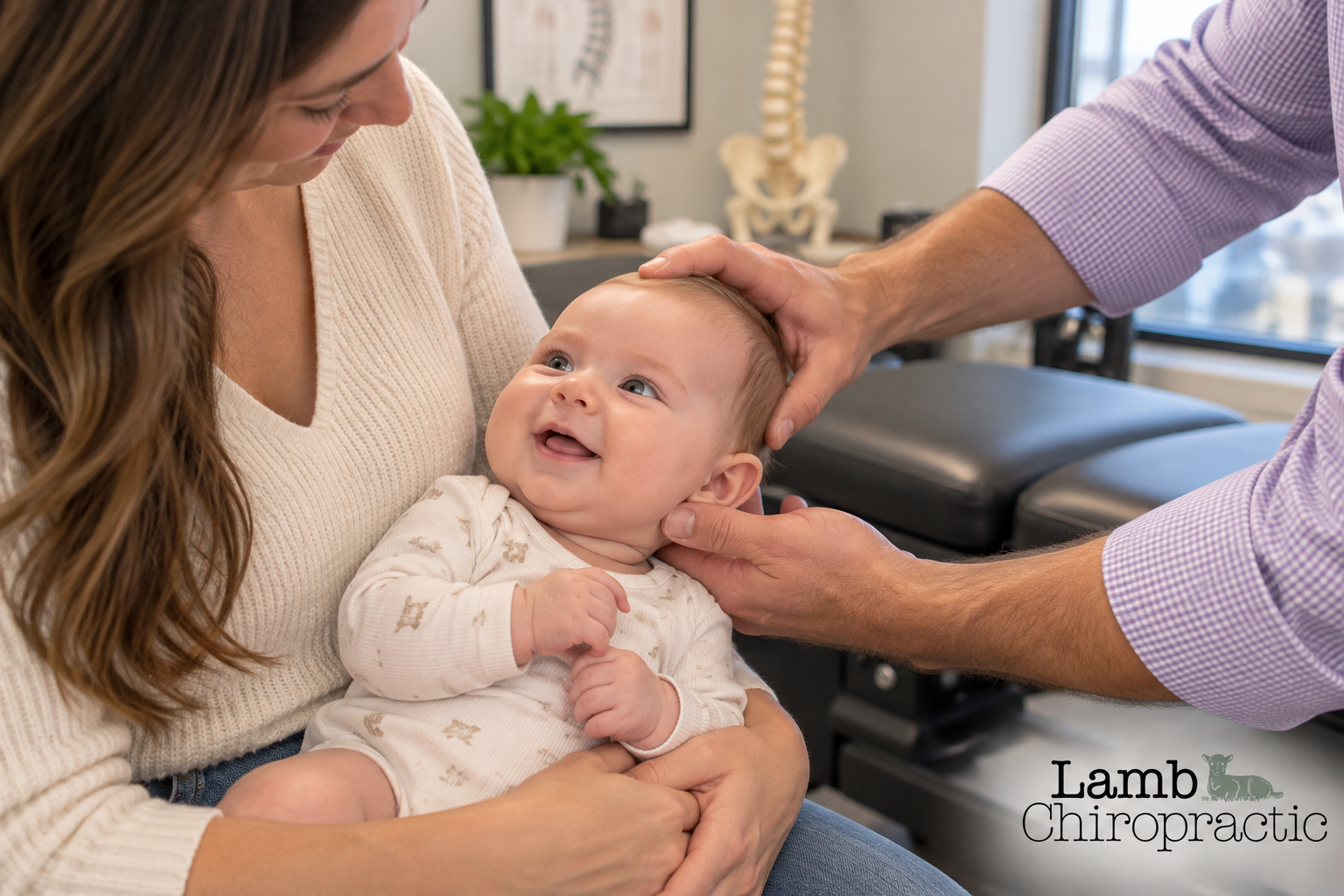
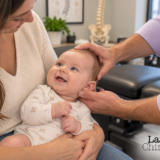
Parents often ask the same question during a first visit: is chiropractic care for children actually safe? It’s a fair question, especially when the patient is only a few days old. Pediatric chiropractic care looks nothing like what most adults picture. There’s no twisting, no popping, and no forceful thrust. Instead, gentle, specific pressure helps a growing spine and nervous system develop the way nature intended. Understanding why families choose chiropractic care for children starts with what happens to a baby’s spine before it ever leaves the delivery room.
Even a “Normal” Birth Is a Traumatic Event
Childbirth is one of the most physically demanding events a body will ever experience, for mother and baby alike. Even in an uncomplicated, vaginal delivery, an infant’s head and neck endure significant pulling, twisting, and compressive force while moving through the birth canal. Interventions like vacuum extraction, forceps, or a C-section can increase that force further.
This isn’t meant to alarm new parents. It’s simply biology. The upper neck houses the brainstem, which controls essential functions like breathing, digestion, and immune response. When the bones of the upper neck shift out of position, even slightly, they can create tension on nearby nerves and soft tissue. A gentle newborn assessment checks for this tension and addresses it early.
Common Reasons Parents Seek Chiropractic Care for Children
Several recurring concerns bring families into a pediatric chiropractor’s office, and most trace back to nervous system function rather than an isolated organ problem.
Colic
The nerves that control the digestive tract exit the spine in the mid-back and lower back. When those areas carry tension from birth, digestion can become disorganized. This may show up as excessive crying, gas, or an inability to settle, especially in the evening. Gentle adjustments can reduce that nervous system irritation, which often calms symptoms within a few visits.
Constipation
Constipation in infants and toddlers follows a similar pattern. If communication between the brain and the digestive organs is disrupted, the gut doesn’t function as smoothly. Restoring motion to the spine, particularly the lower back and pelvis, frequently supports more regular, comfortable bowel movements. Light contact over the sacrum and tailbone, paired with an upper cervical correction, has produced noticeably faster relief in cases of stubborn, week-long constipation.
Ear Infections
Recurrent ear infections are another frequent reason families seek chiropractic care for children. The eustachian tubes in young children sit at a flatter angle than in adults, so fluid drains less efficiently to begin with. Misalignment in the upper neck can add tension to muscles and lymphatic pathways around the ear, making drainage harder. Adjusting the upper cervical spine often helps that fluid move as it should.
Growing Pains
Growing pains, usually felt in the legs at night, are often dismissed as something a child will simply outgrow. In many cases, they stem from uneven movement patterns or joint restrictions that develop as a child’s frame lengthens quickly. Chiropractic care can identify and address these restrictions, easing discomfort during growth spurts. Magnesium is also commonly used to support relaxed, less irritable muscles during these growth periods.
Why Spinal Curves Matter So Much

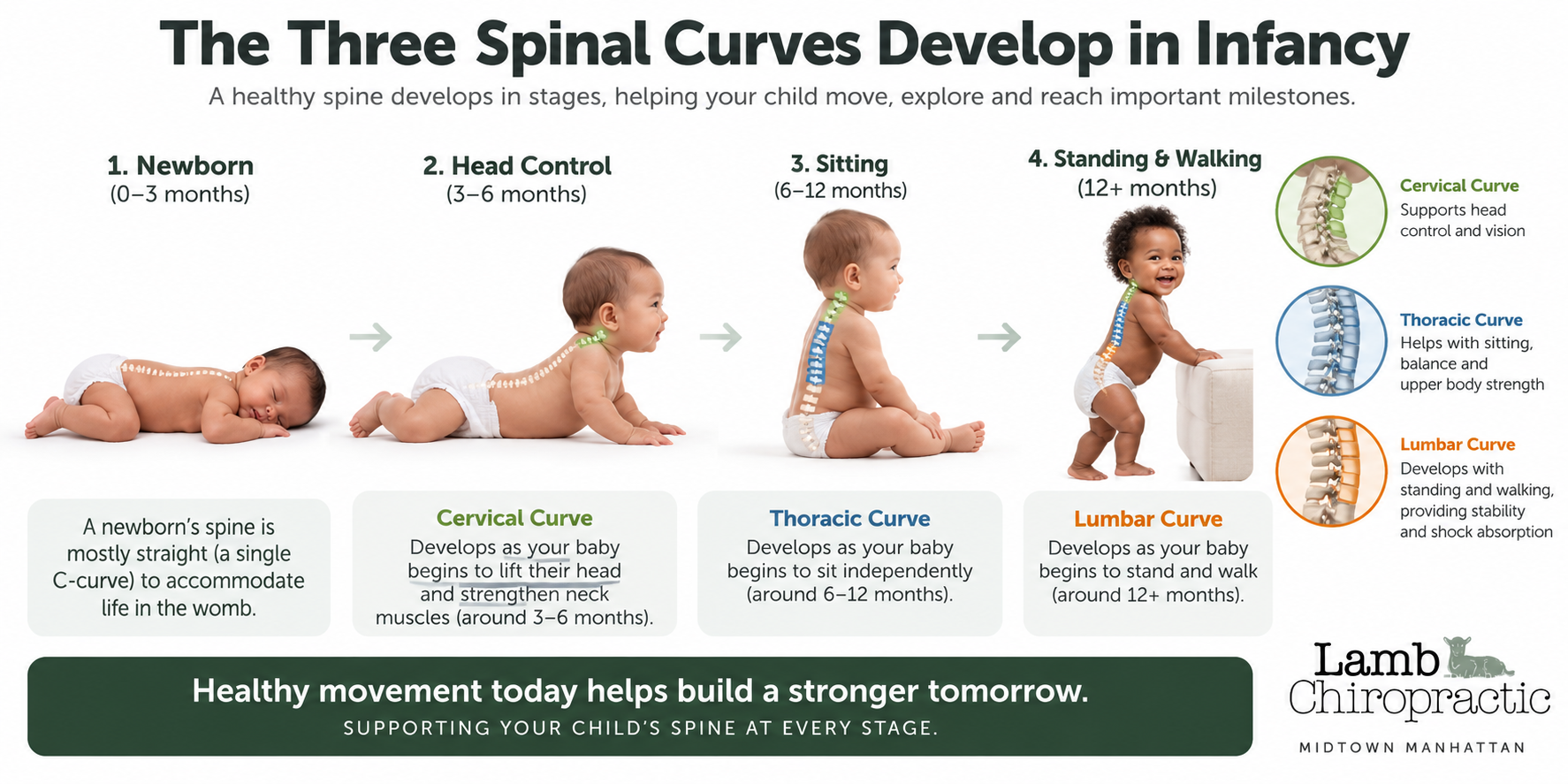
A newborn’s spine isn’t shaped like an adult’s. It starts out as one long, gentle curve, similar to the letter C. Over the first year of life, two new curves develop in the opposite direction, and both are essential.
Cervical lordosis, the inward curve of the neck, forms as an infant begins lifting their head to look around the crib. The term “lordosis” has historical roots tied to looking upward, since early anatomists associated the curve with a posture of looking toward the heavens.
Lumbar lordosis, the inward curve of the lower back, develops later, once a baby starts crawling. As the belly drops toward the floor during crawling, the pull on the lower spine helps shape this curve.
Together with the original curve in the mid-back, these three curves work like a spring, giving the spine its shock-absorbing ability for a lifetime of walking, running, and jumping. When they form correctly, the body handles everyday stress efficiently. When they don’t, the spine searches for another way to absorb that same stress.
How Improper Curve Development Leads to Scoliosis
True congenital scoliosis, meaning a child is born with it, is extremely rare. Most scoliosis develops gradually, through two major contributing patterns.
The first involves the natural spinal curves discussed above. If the cervical or lumbar curve doesn’t develop properly, the spine still needs a way to absorb shock. Without healthy front-to-back curves doing that job, the body sometimes compensates by curving side to side instead. Over months and years, that compensation can progress into structural scoliosis.
The second factor begins once a child starts walking on hard, flat surfaces. The arches of the feet are still soft and developing at this stage. One arch often flattens more than the other, for reasons that aren’t fully understood. When one arch drops lower than its counterpart, that leg functions as though it were slightly longer, since it fills more of the gap between hip and ground.
To compensate, the pelvis develops a chronic rotation, tilting to level things out. The spine, sitting directly on top of the pelvis, then curves to compensate for that rotation. Over time, this chain reaction is one of the most common true root causes of scoliosis in growing children. Addressing foot mechanics and pelvic alignment early can help interrupt this pattern before it progresses. [Internal link: pediatric scoliosis screening page]
Gentle Adjustment Techniques for Babies and Infants
Adjusting a newborn or infant calls for an entirely different toolkit than adjusting an adult. Two primary methods are used most often.
- Instrument-assisted adjustments: A small, spring-loaded activator instrument delivers a light, controlled pulse, often compared to the pressure used to test a piece of fruit for ripeness.
- Hands-on finger adjustments: Light fingertip contact and sustained pressure encourage proper alignment, with no thrust at all. Hands allow a provider to feel how the tissue responds in real time, which supports smaller, more precise corrections as a baby’s body shifts under contact.
Both approaches respect how fragile and responsive an infant’s developing frame truly is.
Skull Shape, Sleep Posture, and SIDS Awareness
An infant’s skull is soft and pliable by design, which allows it to pass through the birth canal and later accommodate rapid brain growth. This same softness means prolonged pressure on one area, such as always sleeping with the head turned the same direction, can gradually flatten that spot.
Rotating sleep position and encouraging supervised tummy time can help maintain even head shape. This guidance works alongside, not against, standard safe-sleep recommendations. Parents should always follow their pediatrician’s guidance on back-sleeping and safe sleep environments to help reduce SIDS risk, while chiropractic care for children supports healthy posture and symmetry during waking hours.
Why Crawling Should Never Be Rushed
It’s tempting for parents to celebrate an early walker, but crawling plays an irreplaceable role in brain development. The cross-body motion of crawling, moving the opposite arm and leg together, builds connections between the brain’s left and right hemispheres. These connections support coordination, reading readiness, and attention skills later on.
Children who skip crawling or walk unusually early sometimes show more developmental difficulties down the road. One effective rehabilitation tool for these children is the cross-crawl exercise, which recreates that opposite-arm, opposite-leg pattern to rebuild the neurological connections crawling would have naturally created. A common version places a child face-down over an exercise ball, sized to the child’s age, performing a bird-dog movement: lifting one arm and the opposite leg together, then alternating sides for a few minutes.

Reducing Environmental Triggers
A developing nervous system is more sensitive to outside stressors than most parents realize. Household chemicals, synthetic fragrances, certain food additives, and excessive screen exposure can all add to a child’s overall stress load. Identifying these triggers and suggesting manageable swaps, such as switching cleaning products or adjusting bedtime routines, is a routine part of chiropractic care for children.
Supporting a Growing Immune System
An infant’s immune system is still learning, and several factors influence how well it develops. Breastfeeding plays a major role, since breast milk transfers antibodies and supports healthy gut bacteria; many pediatric sources point to roughly two years as a beneficial duration for immune, hormonal, and cognitive development. Upper cervical chiropractic care for children complements this process by reducing nervous system interference near the brainstem, an area closely tied to immune regulation.
A Note on Vaccine Schedules
In August 2026, a federal executive order narrowed the universally recommended childhood vaccine schedule from 17 to 11, moved several vaccines to a shared-decision-making basis with a family’s pediatrician, and called for the MMR shot to eventually be given as three separate injections at separate visits. Families with questions about spacing or timing should discuss options directly with their pediatrician.
Meeting Kids Where They Are
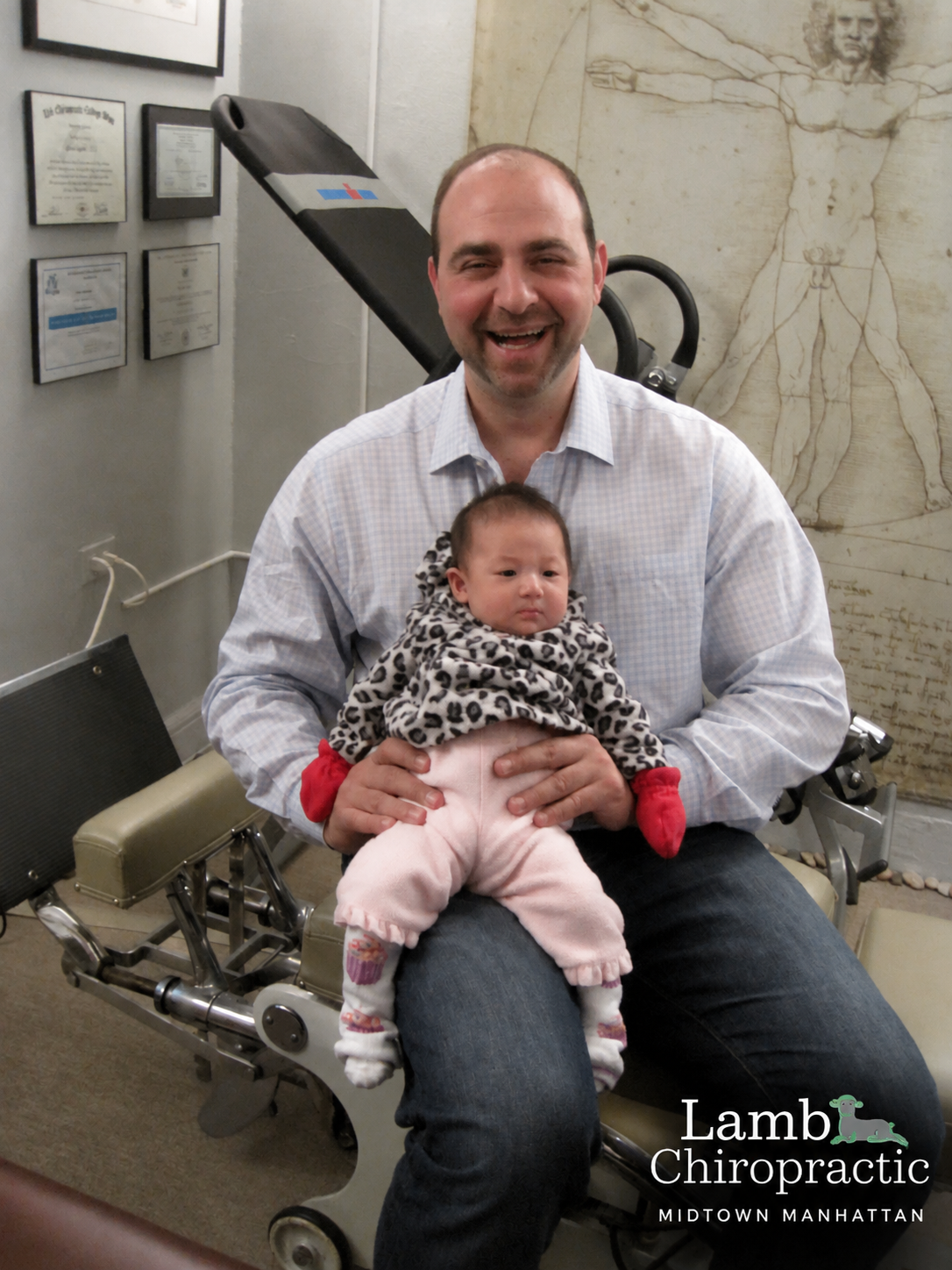
Not every child walks into an office ready to be examined, and that’s completely normal. A patient approach works best: letting a toddler sit on a parent’s lap, turning the first visit into playtime, or building trust over several short visits before hands-on work begins. A squirming toddler often just needs a small distraction to relax into the visit, and a child who was comfortable with neck contact last time may not be in the mood this time. It should never feel like a fight. It should feel safe.
Setting Kids Up for a Healthier Adulthood
Many of the joint problems adults eventually face, including early arthritis and chronic back pain, trace back to postural patterns established in childhood. Properly developed spinal curves distribute force evenly across the joints for decades, while poorly developed curves concentrate that force unevenly and accelerate wear and tear over time.
This is the long game behind chiropractic care for children. It isn’t only about resolving colic or clearing up an ear infection today. It’s about giving a child’s spine, nervous system, and posture the best possible foundation before adulthood arrives. [Internal link: Lamb Chiropractic pediatric services page]
Frequently Asked Questions
Is chiropractic safe for newborns?
Yes. Techniques used on newborns involve extremely light, controlled pressure, often no more force than testing a piece of fruit for ripeness, designed specifically for a fragile, developing spine.
How is a baby’s adjustment different from an adult’s?
Adult adjustments typically use a quick, targeted thrust. Infant and toddler adjustments rely on gentle finger contact or a spring-loaded instrument, with no popping or twisting involved.
Can chiropractic care help with colic?
Many parents report improvement in colic symptoms after a few visits, since reducing nervous system irritation in the mid and lower back can help the digestive system function more smoothly.
At what age can a child start chiropractic care?
Chiropractic evaluations can begin shortly after birth, since even a routine delivery places stress on a newborn’s spine and nervous system.
Does chiropractic care cause pain in children?
Children generally do not experience pain from properly performed pediatric adjustments, since the techniques use far less force than those used with adult patients.
Email lambchiro@gmail.com
IG @lambchiro FB lambchiropractic