How Chiropractic Care Can Help Relieve Stress and Anxiety

Have you been feeling wound up, exhausted, or on edge lately? You’re not alone. In fact, the tension you’re carrying often shows up in your body just as much as your mind. Many patients are surprised to learn that chiropractic care for stress and anxiety is a growing area of interest. This isn’t because a chiropractor treats anxiety directly. Instead, it’s because the spine and nervous system are deeply connected to how your body processes stress. As these build up, they keep your nervous system stuck in a heightened, “on alert” state. As a result, it becomes harder for your mind to settle down, too.
The Stress-Spine Connection
The connection often starts with posture. For example, sitting hunched at a desk or curling over a phone for hours creates poor posture. Poor posture, in turn, creates physical stress on the spine and surrounding muscles. That physical stress then feeds mental stress, and the cycle reinforces itself the longer it goes unaddressed. This is one of the core reasons people explore chiropractic care for stress and anxiety relief. By restoring proper alignment, you can interrupt that cycle at its physical root.
There’s also a chemical side to the picture. Chemical stressors can create physical stress, too. Examples include a poor diet, inflammation, or an underlying organ imbalance. This works through what’s known as an organo-somatic connection. In response to internal stress, the brain can trigger muscular tension at the dermatomal levels tied to the organ involved. In practice, this means some of the tightness in your back or shoulders may trace back to something happening beneath the surface. It isn’t always just a long day at your desk.
How the Nervous System Gets Involved
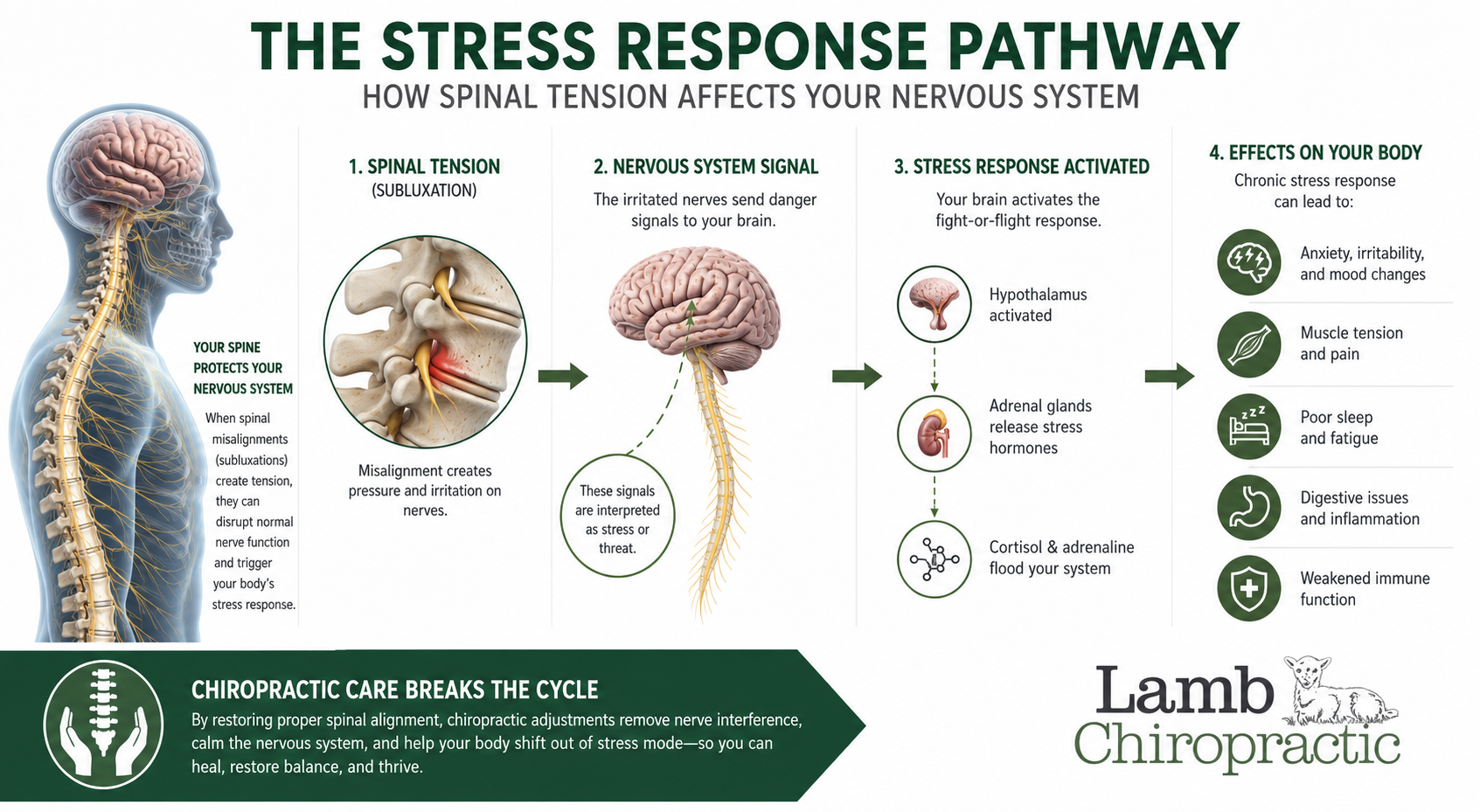
Your autonomic nervous system runs on two main settings. The sympathetic setting drives your “fight or flight” response, while the parasympathetic setting supports “rest and digest.” Chronic stress tends to keep people locked in sympathetic overdrive. This can lead to muscle tightness, shallow breathing, poor sleep, and a racing mind. Fortunately, spinal adjustments seem to stimulate the parasympathetic nervous system. As a result, your body can shift out of that alert state and toward genuine rest and recovery.
What to Expect From a Stress-Focused Chiropractic Visit
A visit built around chiropractic care for stress and anxiety usually starts like any other chiropractic visit. First, you’ll talk through your symptoms, posture, and lifestyle. Next, your chiropractor performs a hands-on assessment of your spine and surrounding muscles. From there, they choose techniques based on where you’re holding the most tension.
Common Techniques Used

For patients who come in stressed or anxious, standing stretches often create the fastest, most noticeable shift. These stretches open up the chest and upper back. Chiropractors typically pair them with a check of the upper cervical spine. This is the area at the base of the skull where tension tends to collect. After that, they check and address the rest of the body as needed. Many chiropractors also pair full-body, head-to-toe adjustments with soft tissue work to release tight muscles. Additionally, some patients benefit from complementary modalities such as cold laser therapy or gentle electric stimulation. Ultimately, the goal isn’t just to crack a joint; it’s to give your whole nervous system permission to downshift.
Everyday Signs Your Body May Be Holding Stress
Stress doesn’t always show up as an obvious feeling of anxiety. Often, it hides in the body first. Common physical signs include:
- Tight shoulders or a stiff, achy neck by the end of the day
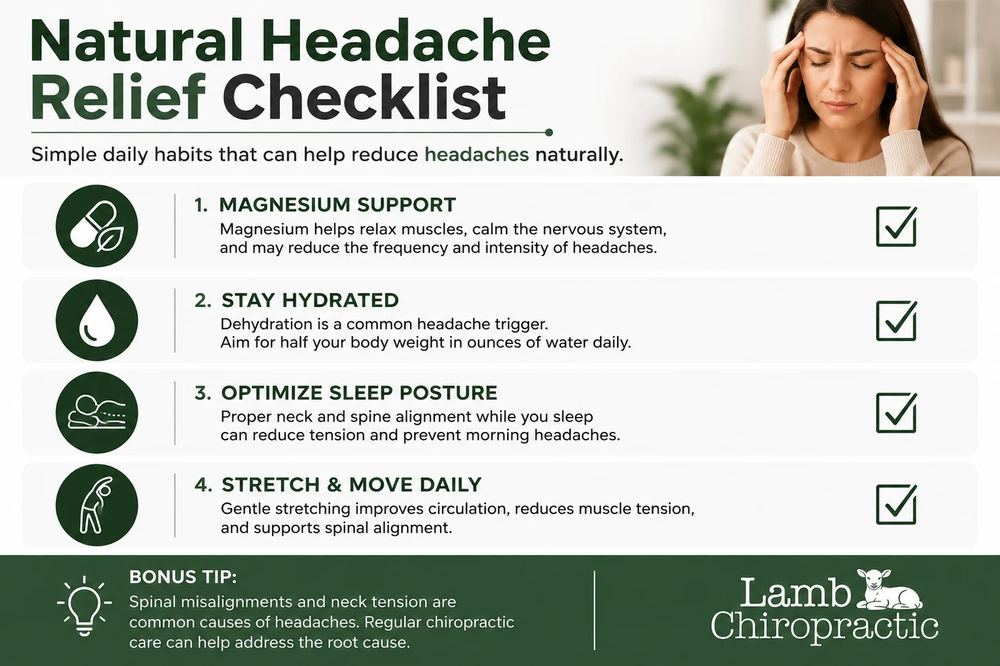
- Frequent tension headaches
- Shallow breathing or a chest that feels “tight”
- Trouble falling or staying asleep
- Jaw clenching or teeth grinding
If several of these sound familiar, consider having your spine and posture evaluated. After all, physical tension and emotional stress travel together more often than not.
Building Stress Relief Into Your Routine
Chiropractic care works best as part of a broader approach to managing stress, rather than a one-time fix. When you pair regular adjustments with simple daily habits, you reinforce the calming effects between visits.
Simple Habits That Support Your Adjustments
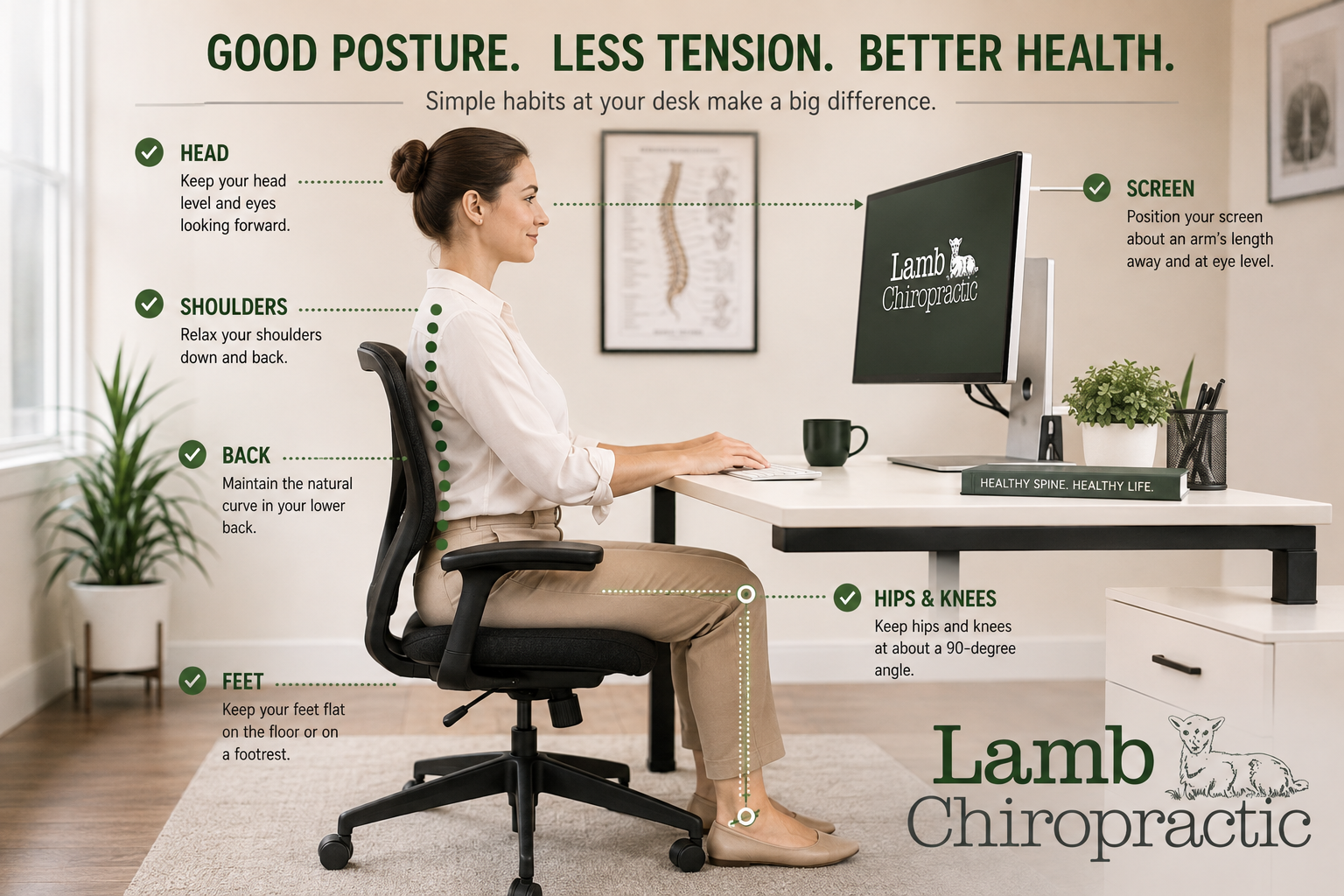
Gentle movement, like walking or stretching, keeps your spine mobile between visits. Similarly, deep, slow breathing exercises activate the parasympathetic nervous system directly. This complements the physical work your chiropractor does during an adjustment. It also helps to stay mindful of your posture during long hours at a desk. After all, poor desk posture is a common contributor to neck and upper-back tension.
Notably, one randomized controlled trial examined twelve weeks of chiropractic care. It found measurable changes in stress-related biomarkers, including cortisol, according to research.
A Note on What Chiropractic Care Can and Can’t Do
Chiropractors are not therapists. Chiropractic care doesn’t replace mental health treatment, and it won’t cure clinical anxiety or panic disorders. However, chiropractors are often one of the first points of contact for people quietly dealing with stress and anxiety. That’s simply because patients visit regularly and tend to open up. Often, the best thing a chiropractor can do is listen. From there, they can offer practical suggestions for managing stress. They can also make a referral when it’s warranted. On top of that, they provide the best possible adjustment to help your brain and body function at their best. In short, it’s a complementary role that addresses the physical tension so often tied up with stress. That said, patients dealing with persistent or severe anxiety should still work with their primary care provider or a mental health professional. They should do this alongside any chiropractic care they pursue.
Frequently Asked Questions
Can chiropractic adjustments really help with anxiety? Chiropractic adjustments don’t treat anxiety as a mental health condition. However, they can relieve physical tension and support nervous system balance. As a result, many patients report feeling calmer and less “on edge” after care.
How many chiropractic visits does it take to notice a difference in stress levels? This varies by person. That said, many patients notice looser muscles and easier breathing within the first few visits. From there, relief tends to build steadily over several weeks of regular care.
Is chiropractic care safe if I already see a therapist or take medication for anxiety? Yes, in most cases. Chiropractic care addresses the physical side of stress and works well alongside therapy or medication. Even so, it’s always a good idea to keep your care team informed about all the treatments you’re using.
What other symptoms might improve alongside stress relief? Patients often notice improvements in sleep quality, headache frequency, and neck and shoulder tension. Overall posture tends to improve as a side benefit, too.
This article is for informational purposes only and is not a substitute for professional medical or mental health advice, diagnosis, or treatment. Always consult your physician or a qualified mental health provider regarding any medical condition, including anxiety or chronic stress.
Email lambchiro@gmail.com
IG @lambchiro FB lambchiropractic