Can a Chiropractor Help With Sciatica?
If you’re dealing with pain shooting down one leg, chances are you’ve already searched for a chiropractor for sciatica near me more than once this week. So can a chiropractor help with sciatica? In my NYC practice, the answer is yes, and it’s one of the conditions I help people with almost every single day.
What Sciatica Actually Is
Sciatica isn’t a diagnosis by itself. It’s a specific pattern of nerve pain, and recognizing that pattern is the first step toward fixing it.
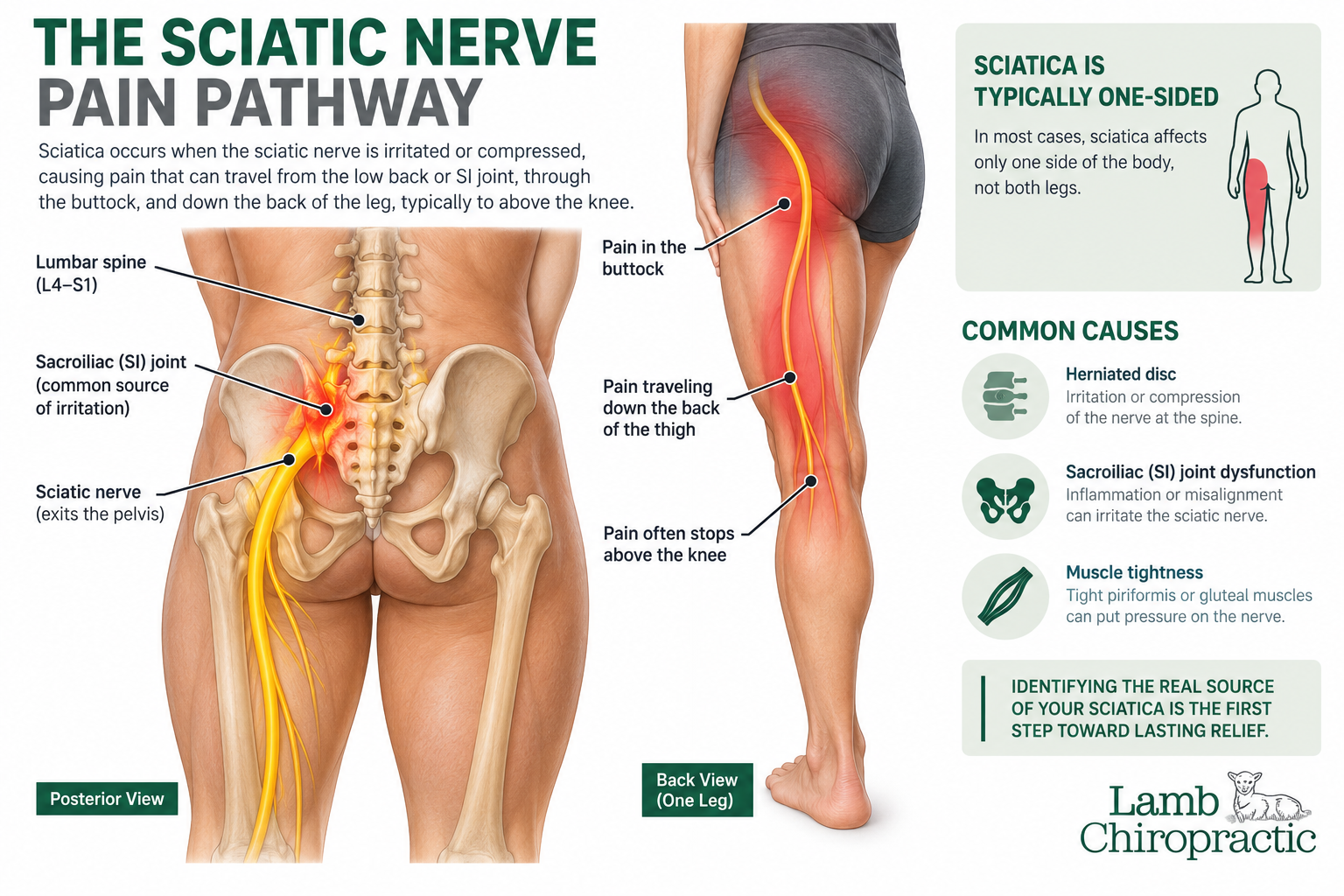
Classic sciatica starts around the PSIS, the bony landmark you can feel on either side of your lower back, or around the SI joint itself. From there, the pain travels through the buttock and down the back of one leg. Importantly, it typically stops above the knee rather than continuing all the way down.
One detail surprises a lot of patients: true sciatica is almost always one-sided. According to the Mayo Clinic, sciatica occurs when pressure builds on the sciatic nerve root, and that pressure is nearly always localized to a single side of the spine. If you’re feeling pain shooting down both legs at once, something other than sciatica is likely at play.
Location matters too. Pain running down the front of your leg is usually not coming from the sciatic nerve at all. As the Cleveland Clinic notes, there are true cases of sciatica and sciatica-like conditions that feel similar but stem from nearby nerves instead. Knowing the difference changes how the problem should be treated, which is exactly why so many people search specifically for a chiropractor for sciatica rather than general back pain.
How Chiropractic Adjustments Target the Root Cause
In my experience, sciatica is almost never caused by just one thing. It’s usually a layered combination of issues that build on each other over time.
It typically begins with disc issues at the level where the sciatic nerve roots exit the spine. Most cases start with compression of the L5 or S1 nerve root as it exits the spine. According to the Mayo Clinic, that early disc involvement sets the whole pattern in motion. Alongside that, chronic hip and sacral misalignment and fixation develops, often driven by muscle tightness and arthritis. As the nerve gets compressed exiting the spine, it travels down through the buttock. This is where a misaligned SI joint can trigger a piriformis spasm. That spasm then further compresses the sciatic nerve, compounding the original pain.
Because sciatica has this layered cause, a chiropractor for sciatica has to address more than just “the leg.” Here’s what a visit actually looks like in my office.
My Sciatica Adjustment Protocol
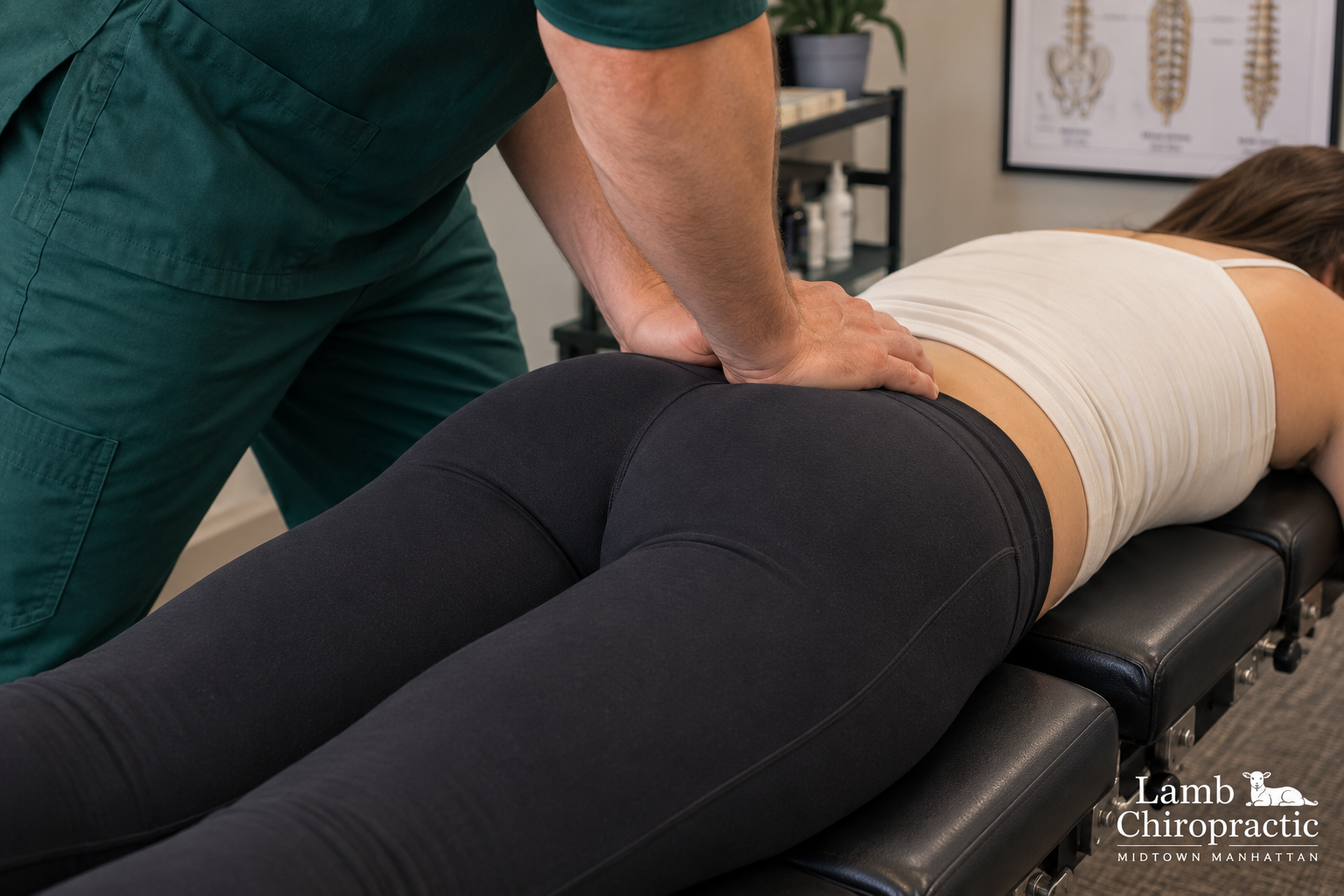
I start with a Derefeld leg-length test to identify which hip is posteriorly rotated. On that side, the sacrum is usually pushed anteriorly, and posteriorly on the opposite side. The sciatic pain typically correlates with the posteriorly rotated sacrum, which is the main driver of the piriformis spasm. I also check alignment through the entire spine, since sciatica is rarely an isolated problem confined to one segment.
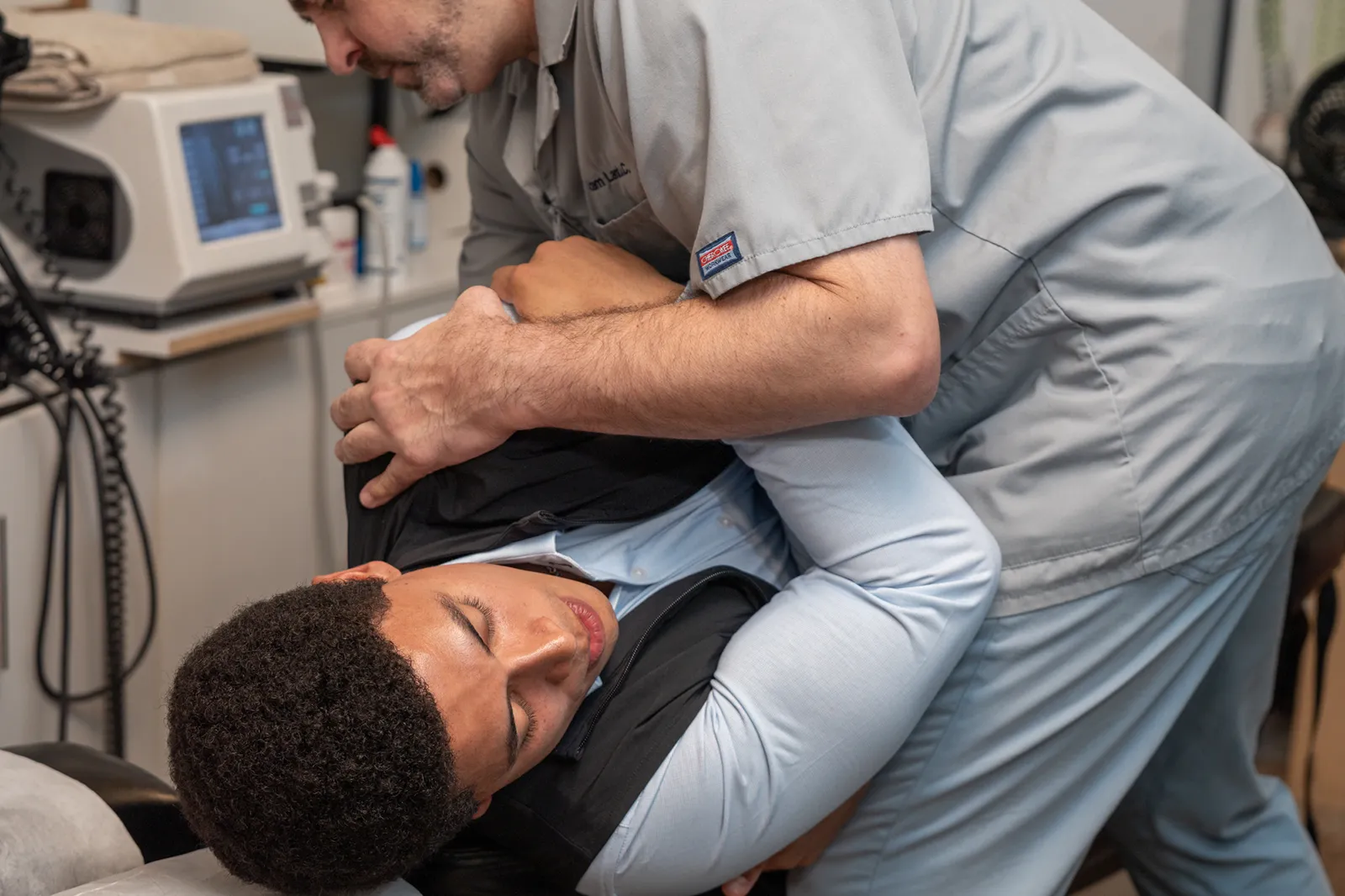
From there, I typically adjust the hip and sacrum or tailbone using a drop table first. If that doesn’t fully resolve it, I move to side-posture adjusting and SOT blocking. I also release the piriformis directly, and I work on releasing the psoas through a combination of stretches and manual techniques. Finally, I check and adjust the rest of the body, since misalignments elsewhere often feed back into the pelvis and lower back.
This kind of hands-on, root-cause approach is well supported by the broader research on manual therapy. According to research, spinal manipulative therapy can be as effective as other recommended interventions for chronic spine pain, including standard medical care. That’s an encouraging finding for anyone weighing chiropractic care against other options before committing to a treatment plan.
Where Spinal Decompression Fits In
For patients dealing with a bulging or herniated disc, spinal decompression is often the most effective tool available. All tables work, but I regularly see elderly and pregnant patients who either can’t tolerate or are contraindicated for a typical decompression setup. This is where our Back on Trac spinal decompression system comes in. It’s gentle enough for patients who otherwise couldn’t get this kind of treatment at all, which makes it a strong option if you’re specifically searching for a spinal decompression chiropractor near me.
The research backs this up directly. One clinical study found that nonsurgical spinal decompression measurably reduced leg pain intensity compared to a sham treatment in patients with herniated discs, with the benefit showing up within the first two months of care. We’ll also bring in shockwave therapy and cold laser treatment for certain sciatica cases, depending on exactly what’s driving the pain.
Stretches That Complement In-Office Care
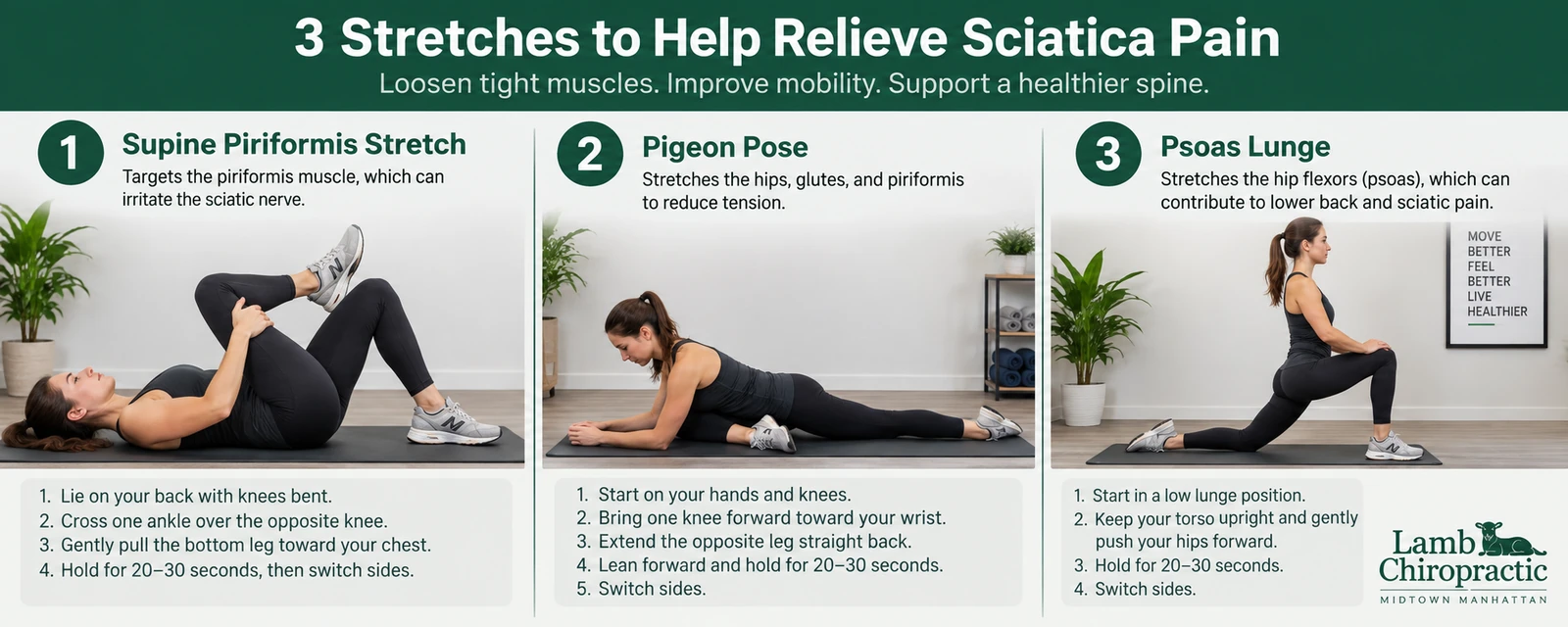
Adjustments do the heavy lifting, but what patients do between visits genuinely matters. I usually recommend a short, focused routine:
- Supine piriformis stretches
- Pigeon pose
- Lunges to stretch the psoas
- At-home lumbar decompression
- A lumbosacral support brace during flare-ups
Ice versus heat depends on what’s driving your pain. If a disc issue is suspected, ice the lower back. If it’s more muscle-spasm related, heat tends to work better instead. Natural anti-inflammatories and magnesium for muscle relaxation can also support recovery between visits.
How quickly you feel relief really depends on the person. Some patients feel noticeably better after just one or two visits. Others, especially if there’s more going on structurally or if they’re not doing their part with stretching and activity modification, may need weeks or months of consistent care. In short, compliance with the “homework” makes a real difference in how fast you recover, and it’s a bigger factor than most patients expect.
When to See a Chiropractor vs Something Else
Most patients dealing with sciatica, whether it’s severe and acute or a chronic dull ache, should start with X-rays of the lumbosacral spine. Depending on those results, an MRI is often the next step to get a clearer picture of what’s happening at the disc level.
There’s one symptom that should send you straight to the ER rather than a chiropractor’s office: bowel or bladder incontinence. That’s a red flag requiring immediate medical attention and, eventually, evaluation by an orthopedic surgeon.
Outside of that emergency scenario, physical therapy can be a helpful part of a broader rehab plan. That said, usually chiropractors can provide that same level of rehab care directly. It’s worth knowing that all chiropractors are required to pass the same PT national boards, so the rehab expertise people associate specifically with PT’s is very much part of chiropractic training too. You can see the full range of conditions we treat at Lamb Chiropractic, since sciatica rarely shows up in complete isolation from other spinal issues. Most patients presenting with sciatica, have a combination of disc issues, pelvic imbalance and muscular dysfunction.
You Don’t Have to Live With Sciatica Pain
There’s a persistent myth that sciatica either lasts forever or requires drugs and surgery to fix. In my experience, that’s simply not true for the vast majority of patients. Sciatica usually resolves without either one.
My philosophy is simple: there’s no need to live in pain. Getting adjusted early and frequently helps you get relief faster, and staying consistent with regular care afterward keeps sciatica from coming back. When your spine and pelvis are properly aligned, your nervous system can function the way it was designed to, with unfettered nerve flow throughout the body. That principle runs through everything we do, and you can read more about the broader benefits of consistent chiropractic care beyond just pain relief.
If you’re searching for a chiropractor for sciatica near me, or wondering whether a chiropractor near me for sciatica could help with a bulging or herniated disc, that’s exactly the kind of case we see and treat every day. Chiropractic care is built around finding and correcting the root cause, not just chasing the symptom. Reach out and schedule an appointment and let’s figure out what’s actually driving your pain.
Frequently Asked Questions
Can a chiropractor help with sciatica?
Yes. Sciatica is one of the most common conditions treated in a chiropractic office. Adjustments to the hip, sacrum, and spine, combined with piriformis and psoas release work, target the mechanical causes behind most sciatica cases.
How long does it take for a chiropractor to fix sciatica?
It varies by patient. Some people feel real relief after just one or two visits, while others need weeks or months of consistent care, especially if there’s significant disc involvement or they’re not doing their stretching and activity modification between visits.
What does a chiropractor do for sciatica?
A thorough sciatica visit typically includes a leg-length test to find the rotated hip, a full spinal alignment check, adjustments to the hip and sacrum, and direct release work on the piriformis and psoas muscles.
Is spinal decompression better than regular chiropractic adjustments for sciatica?
They serve different purposes and often work best together. Adjustments correct misalignment and reduce muscle spasm, while spinal decompression, such as our Back on Trac system, specifically targets disc compression in cases of bulging or herniated discs.
When should I see a doctor instead of a chiropractor for sciatica?
Immediately seek emergency medical care if you experience bowel or bladder incontinence. For severe or chronic pain, X-rays and possibly an MRI are appropriate first steps, which your chiropractor can help coordinate.
Can sciatica come back after chiropractic treatment?
It can, particularly if the underlying misalignment, muscle tightness, or aggravating activities return. Regular maintenance care, ongoing stretching, and addressing posture and activity habits are the best ways to keep it from recurring.
Email lambchiro@gmail.com
IG @lambchiro FB lambchiropractic