Can Back Pain Make You Constipated? Understanding the Spine, Gut, and Nervous System Connection
Can Back Pain Make You Constipated?
Many people are surprised to learn that the spine and digestive system are closely connected. If you are dealing with both digestive issues and spinal discomfort, you may be wondering can back pain make you constipated.
The answer is yes in some cases. The spine houses and protects the nerves that regulate many internal organs, including those responsible for digestion and bowel movements. When spinal structures become irritated, restricted, or compressed, these nerve signals can be affected.
Patients frequently visit our Midtown Manhattan chiropractic office with complaints of lower back pain and constipation occurring at the same time. Understanding how the nervous system, spinal health, posture, and mobility influence digestion can help explain why these symptoms sometimes occur together.
For some individuals, back pain causes constipation through nerve irritation, decreased mobility, increased stress, or nervous system imbalance.
How the Spine and Digestive System Are Connected
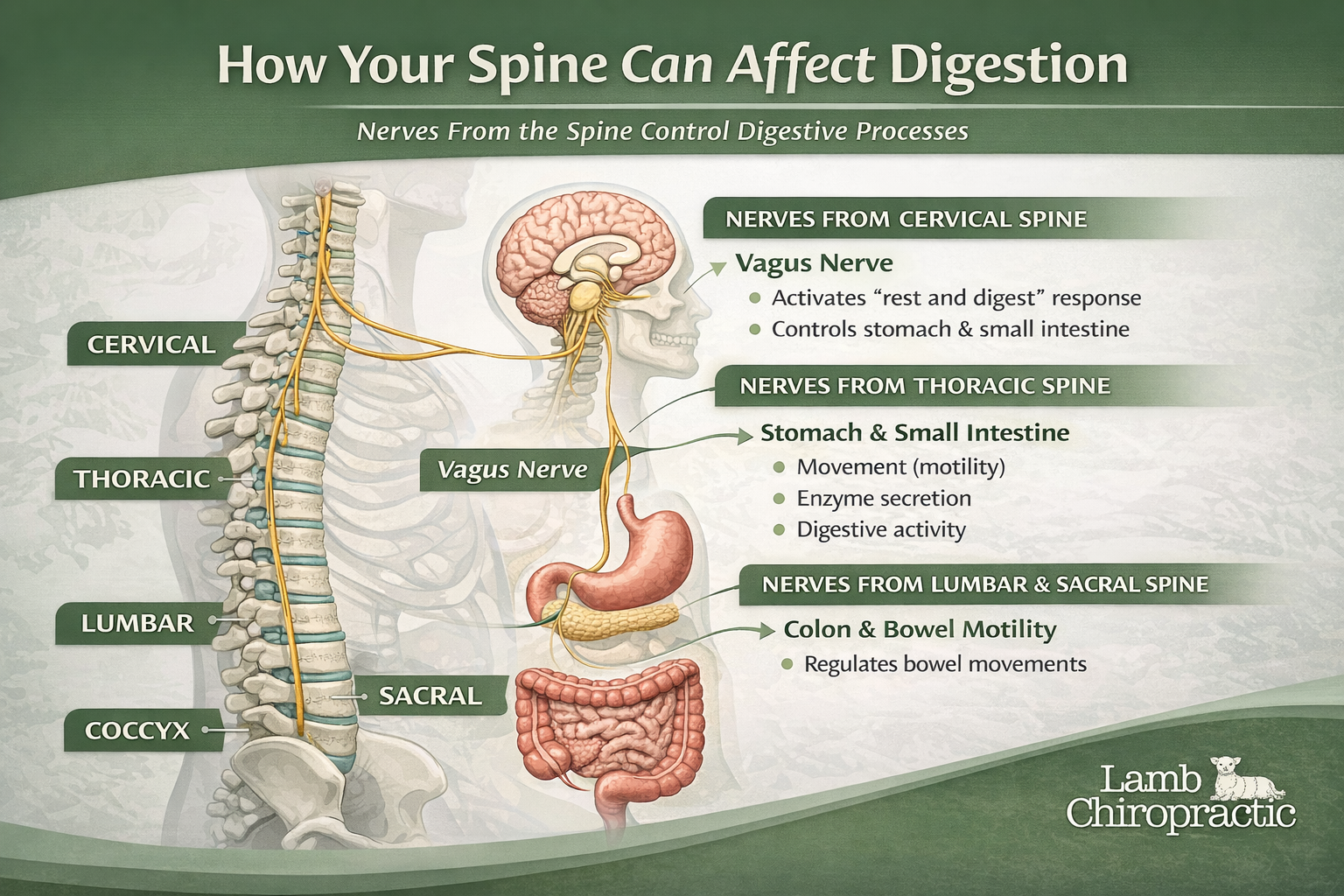
Your digestive system is heavily regulated by the nervous system, particularly the autonomic nervous system, which controls automatic body functions such as digestion, heart rate, and organ activity. The two parts of the autonomic nervous system are the sympathetic and parasympathetic systems. Nerves travel from the brain down through the spinal cord and branch outward to communicate with digestive organs. These nerve pathways regulate intestinal contractions, enzyme secretion, and the movement of food and waste through the digestive tract.
Several areas of the spine influence digestive function. The thoracic spine helps regulate organs involved in early digestion such as the stomach and small intestine. The lumbar spine and sacral nerves influence the colon and bowel activity, including the movement of stool through the large intestine. When spinal joints lose normal mobility or when conditions such as bulging discs, herniated discs, or joint dysfunction place stress on nearby nerves, communication between the brain and digestive organs may become disrupted. This is one reason some patients experience digestive changes when dealing with spinal problems and ask whether can lower back pain make you constipated.
Causes of Constipation
Constipation can develop for many reasons. Often multiple factors contribute at the same time.
Medication Side Effects
Many commonly prescribed medications list constipation as a side effect. Pain medications, muscle relaxants, antidepressants, and certain blood pressure medications may slow intestinal movement and reduce bowel motility.
Reduced Mobility
Pain itself can indirectly cause constipation. When someone experiences back pain, sciatica, or joint discomfort, they often move less. Movement helps stimulate intestinal activity. When physical activity decreases due to pain, the digestive system can slow down.
Nerve Compression
One important factor when asking can lower back pain make you constipated is nerve function. Spinal conditions such as bulging or herniated discs, spinal joint restrictions, or pelvic dysfunction may irritate nerves responsible for regulating bowel function. When nerve communication between the brain and digestive organs becomes impaired, intestinal movement can slow.
Stress and Nervous System Imbalance
Chronic pain places stress on the body. Increased stress causes chronic activation of the sympathetic nervous system. Everyone knows this stress response as the fight or flight reaction. When the body is stressed, it wants to send blood away from the core to the extremities so that you can fight or run away from a threat. When this happens, decreased blood flow to the core wreaks havoc on the digestive system. When this system is dominant, digestion slows and intestinal movement decreases. Over time this may contribute to constipation.Most people don’t realize that this sympathetic nervous system is almost always firing. We need to actively do things so that our parasympathetic nervous system is allowed to work properly. This is the wining and dining system and is necessary for good digestion and relaxation.
The Gut Brain Connection and the Vagus Nerve
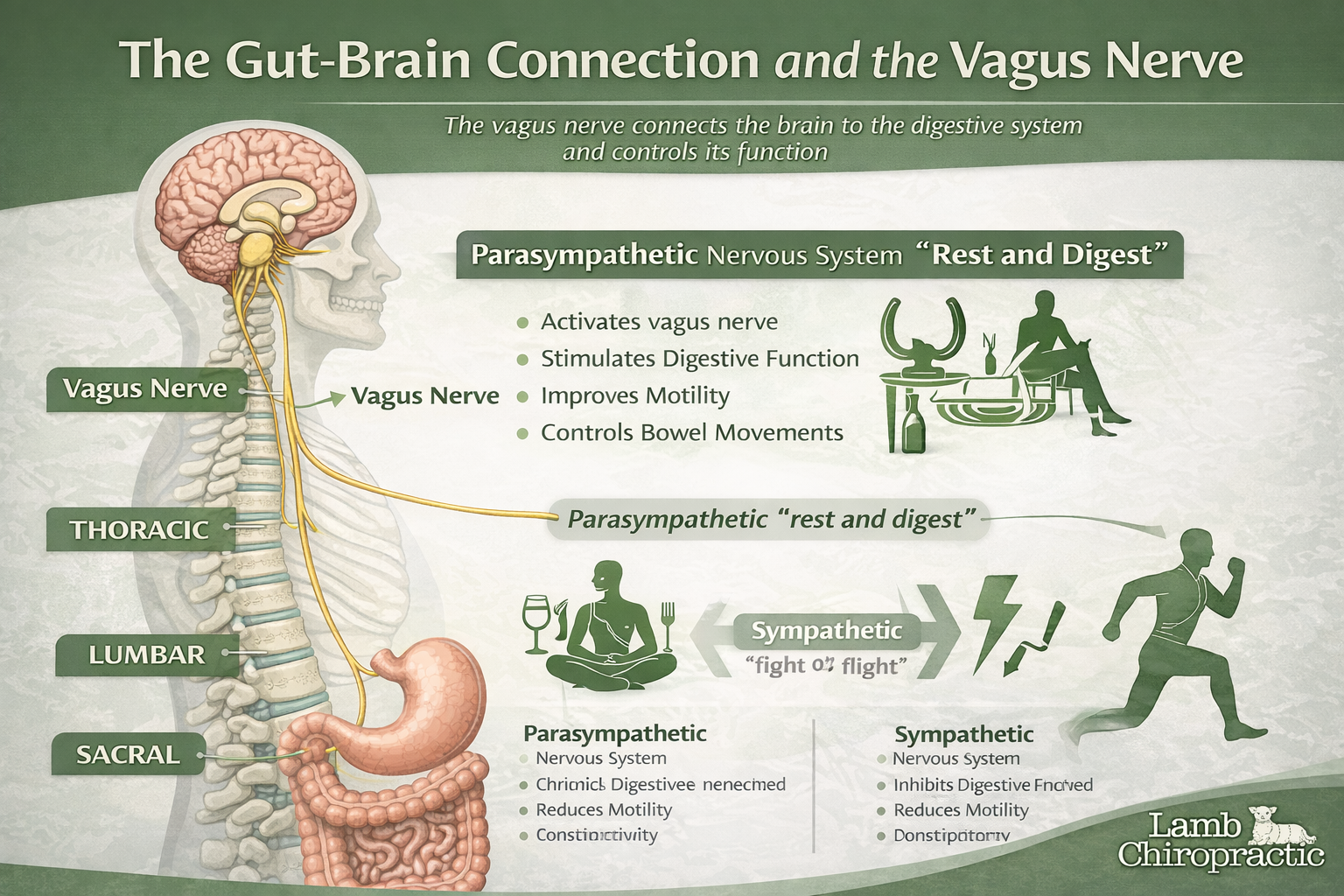
One of the most important regulators of digestion is the vagus nerve.
The vagus nerve originates in the brainstem and travels down through the neck into the chest and abdomen. It acts as a major communication pathway between the brain and digestive organs including the stomach, liver, pancreas, and intestines. The vagus nerve is responsible for activating the parasympathetic nervous system, often referred to as the rest and digest system. When the vagus nerve is functioning properly, it helps stimulate digestive activity, intestinal movement, and normal bowel function.However, modern life tends to keep many people stuck in the sympathetic nervous system, also known as the fight or flight system. Work stress, chronic pain, poor sleep, long hours sitting, and constant stimulation can keep this system activated.
When the sympathetic system dominates, digestion slows down. Blood flow shifts away from digestive organs, intestinal motility decreases, and constipation can develop. Supporting parasympathetic activity is essential for proper digestive health. Chiropractic care helps support this balance by improving spinal mechanics and reducing tension in areas that influence nervous system activity, particularly the upper cervical spine and the sacral region.
Can Constipation Cause Back Pain?
Many people ask can back pain make you constipated, but the reverse can also happen.
Constipation can increase pressure inside the abdomen and pelvis. When stool accumulates in the colon, it can cause abdominal distention and increased pressure on surrounding tissues. This pressure may contribute to discomfort in the lower back, sacrum, and pelvic region. Muscles in the abdominal wall and pelvic floor may tighten in response to this pressure, which can also contribute to lower back tension. For some individuals, constipation and back pain create a cycle where each condition worsens the other.
Conventional Medical Approaches to Constipation
Conventional medical care often focuses on relieving constipation symptoms rather than addressing underlying causes. Doctors frequently recommend increasing dietary fiber intake or using fiber supplements such as psyllium products like Metamucil. Other commonly used remedies include over the counter laxatives and medications such as milk of magnesia, which help stimulate bowel movements. While these treatments can provide temporary relief, they do not always address contributing factors such as nerve irritation, pelvic floor dysfunction, reduced mobility, or nervous system imbalance.
Natural Approaches That Support Digestion
Several natural strategies may help support healthy bowel function. Regular physical activity is one of the most effective ways to stimulate intestinal movement. Walking, stretching, and daily movement encourage normal digestive activity. Abdominal massage is another simple method that may help move stool through the colon. This is typically performed in a clockwise direction, following the natural pathway of the large intestine. Proper hydration is also important. Water helps soften stool and supports the digestive process.
The Importance of the Pelvic Floor and Core Muscles
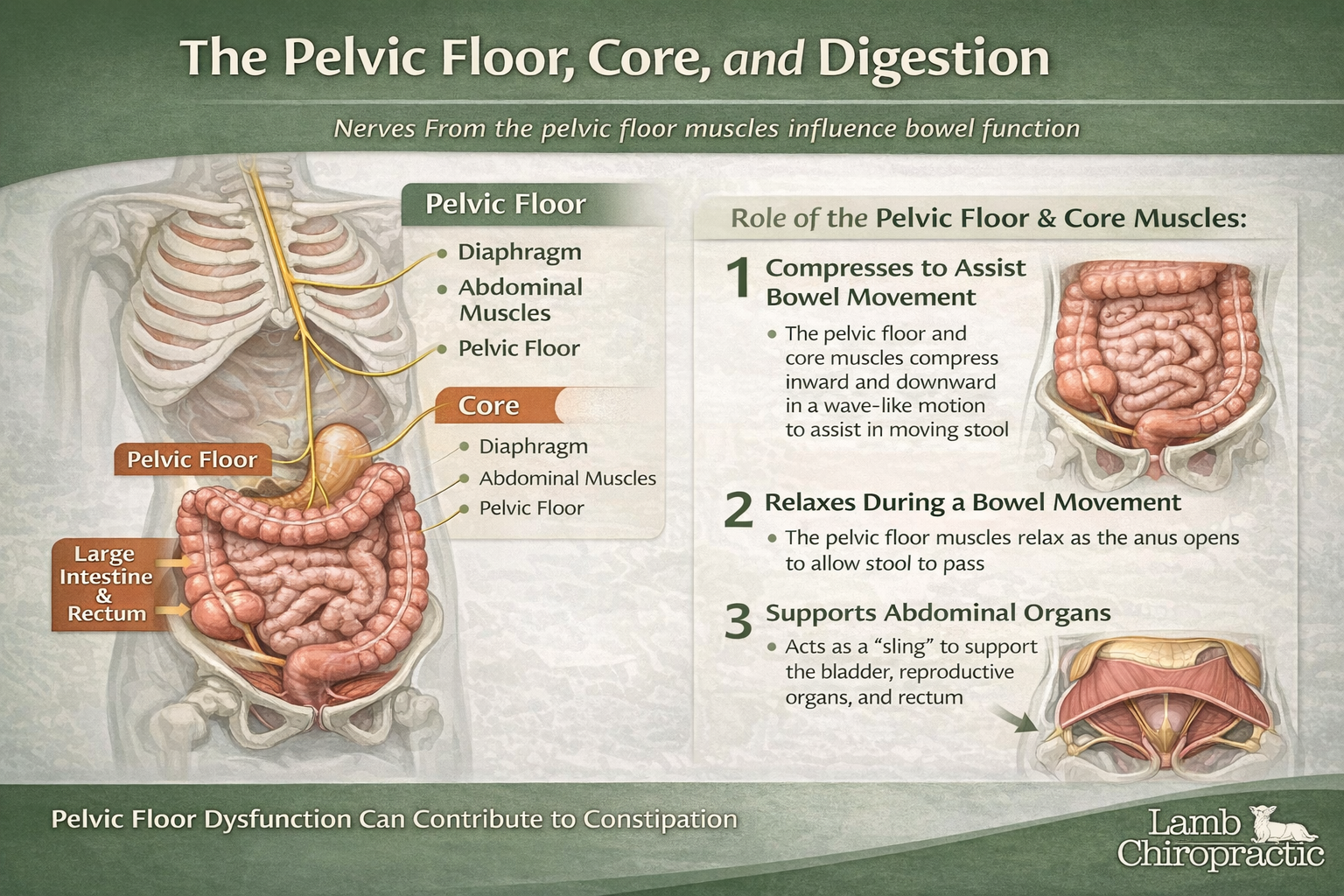
The pelvic floor and core musculature play a significant role in bowel function. The pelvic floor forms the base of the pelvis and supports organs such as the bladder and rectum. These muscles work together with the diaphragm, abdominal wall, and spinal stabilizers to regulate pressure inside the abdomen. A proper bowel movement requires coordinated muscle activity involving the abdominal muscles, pelvic floor relaxation, and pressure changes within the abdomen. If the pelvic floor becomes weak, overly tight, or poorly coordinated, bowel function can become impaired.
Prolonged sitting, poor posture, and spinal dysfunction can influence pelvic floor mechanics. Many people spend long hours sitting at desks or commuting, which places pressure on the sacrum and pelvic structures. Over time this can affect muscle tension patterns in the pelvis and contribute to constipation. Improving spinal alignment, strengthening the core, and restoring proper coordination between the diaphragm, abdominal wall, and pelvic floor can support more normal bowel function.
How Chiropractic Care May Help Constipation

Chiropractic care focuses on improving nervous system function and reducing mechanical stress within the spine and surrounding tissues. In my practice, I have personally worked with many colicky and constipated infants. One of the most common reasons for colic in babies is constipation. Wouldn’t you cry and complain if you were constipated and had no way of understanding it or relieving it? We employ very gentle chiropractic techniques aimed at stimulating the parasympathetic nervous system by addressing the sacral plexus and the upper cervical complex. Chiropractic care helps shift the body into a rest and digest state, which promotes regular bowel movements. Pregnant moms and the infants can both benefit from gentle chiropractic care.
Improving Nerve Function
Gentle, specific adjustments in the lumbar spine, pelvis, and upper cervical spine help restore motion and reduce nerve irritation. When nerve communication improves, the nervous system is better able to regulate intestinal function.
Releasing Tension in Supporting Structures
Treatment may also involve releasing tension in muscles and ligaments that influence spinal mechanics. Structures such as the sacrotuberous ligament and the atlanto dental region can develop restriction and contribute to mechanical stress within the spine. Reducing this tension can help improve nervous system efficiency.
Addressing Physical Stress and Trauma
Digestive issues can sometimes develop following physical stress or trauma. In infants this may include birth related mechanical stress affecting the cervical spine or pelvis. In adults, injuries, repetitive strain, prolonged sitting, or poor posture can contribute to spinal dysfunction that affects nerve signaling.
The Role of Posture, Sitting, and Sleeping Habits
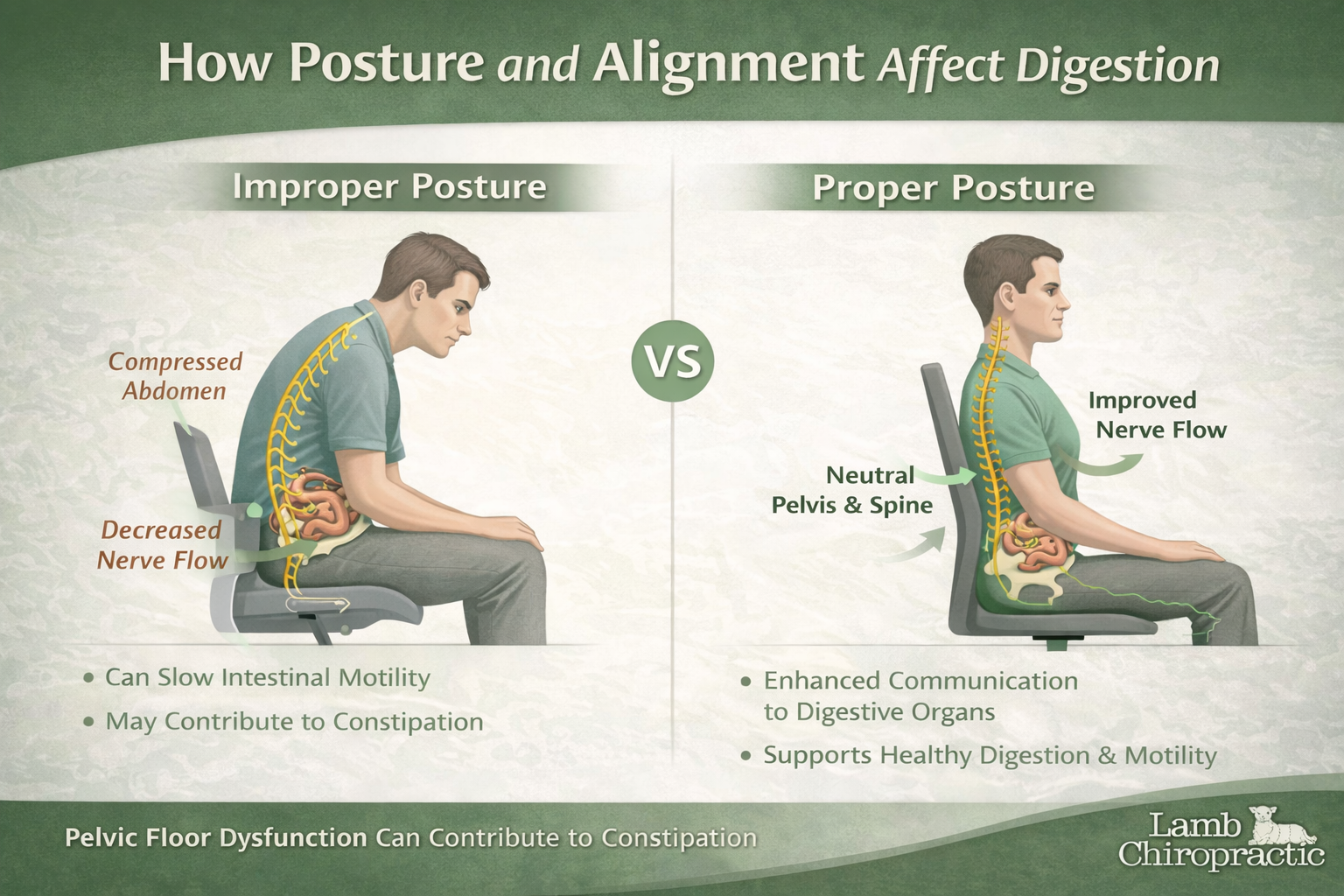
Modern lifestyles place significant stress on the spine. Many people spend long hours sitting at desks or looking down at phones and laptops. If you’re one of the millions currently working from home, this article may be helpful. Prolonged sitting compresses the lumbar spine and pelvis, decreases core activation, and reduces overall movement. This combination can slow digestive activity. Sleeping habits also influence spinal health. Poor mattress support or improper pillow positioning may place excessive strain on the neck and lower back. Improving posture, ergonomic sitting positions, proper sleep support, and regular movement can support both spinal health and digestive function.
Warning Signs That Require Immediate Medical Attention
While constipation is common, certain symptoms may indicate a serious neurological condition.
Immediate medical attention should be sought if constipation or back pain occurs alongside:
Loss of bowel or bladder control
Numbness around the anus or genital region
Severe numbness or tingling down both legs
Sudden weakness in the legs
These symptoms may indicate conditions such as cauda equina syndrome, which requires emergency medical care.
Frequently Asked Questions
Can back pain make you constipated?
Yes. Spinal nerve irritation, reduced mobility, and nervous system imbalance can contribute to constipation.
Can lower back pain make you constipated?
Lower back pain may affect nerves that help regulate bowel function. When these nerves become irritated, intestinal movement may slow.
Can constipation cause back pain?
Yes. Constipation can increase abdominal pressure and contribute to lower back discomfort.
Can chiropractic care help constipation?
Chiropractic care may help improve nervous system function and spinal mobility, which can support normal digestive activity.
If you are experiencing back pain, digestive discomfort, or nerve related symptoms, addressing spinal health may be an important step toward improving overall wellness.
At Lamb Chiropractic in Midtown Manhattan, we take a full body approach to health and performance. If you are wondering whether can back pain make you constipated, a comprehensive evaluation may help identify contributing factors.
Send us a message if you have any questions or would like to schedule your first chiropractic visit at Lamb Chiropractic in New York, NY!
Phone 212-883-8700
Email lambchiro@gmail.com
IG @lambchiro