
Why Working From Home Causes Back Pain and What to Do About It
Working from home has changed how millions of people spend their day. While remote work offers flexibility and convenience, it has also led to a sharp rise in musculoskeletal complaints—especially back pain. At Lamb Chiropractic, we regularly see patients who never had back issues before working remotely or whose existing pain worsened once their daily routine shifted home.
Understanding why working from home causes back pain is essential if you want lasting relief. The problem isn’t working from home itself—it’s how the body is being used (and often misused) for hours at a time. The good news is that with the right adjustments, movement strategies, and chiropractic care, this type of pain is highly manageable and often preventable.
Why Working From Home Causes Back Pain

Back pain related to remote work usually develops gradually. Many people don’t feel a sudden injury but instead notice stiffness, tightness, or soreness that slowly becomes more persistent. This happens because the spine is being exposed to repeated low-level stress without enough recovery or movement.
Several factors contribute to this pattern, including poor ergonomics, prolonged sitting, reduced activity, and increased stress. Over time, these factors overload joints, strain muscles, and interfere with healthy spinal mechanics.
Poor Home Office Ergonomics
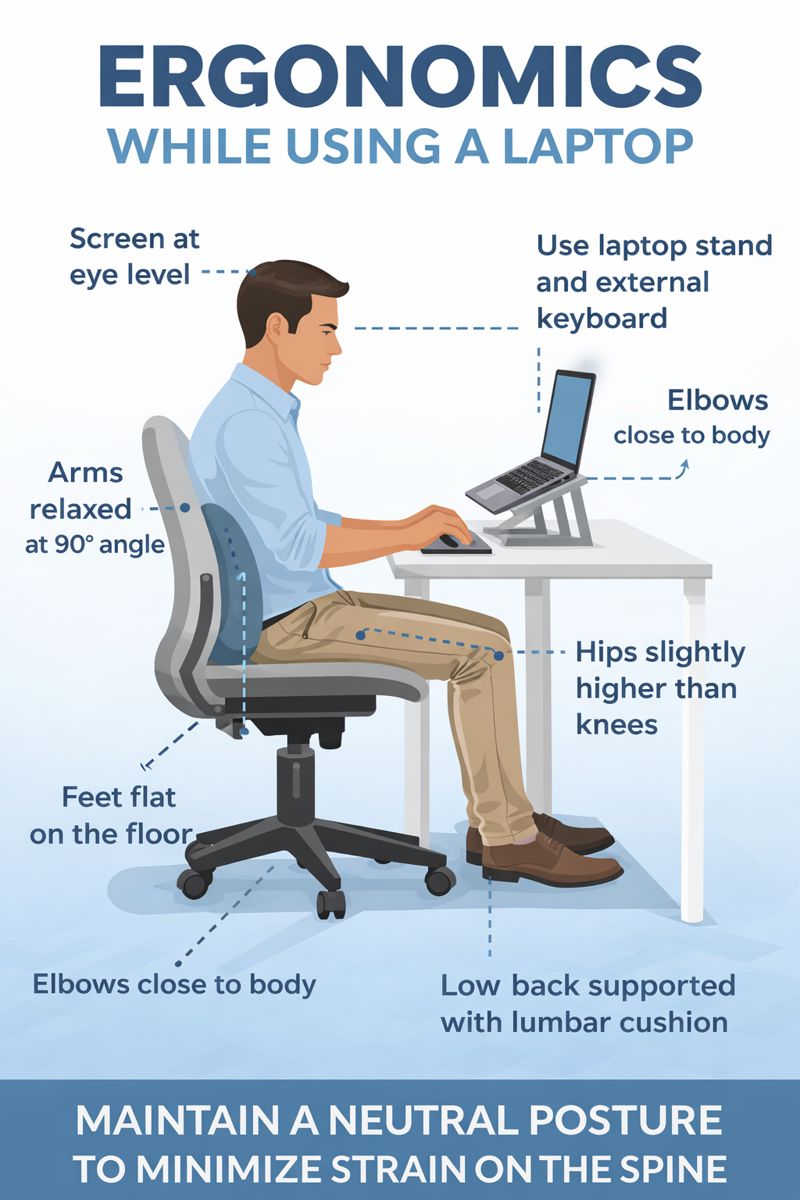
One of the most common reasons working from home causes back pain is improper workstation setup. Most homes were not designed for full-time office work, and many people improvised their workspaces using kitchen tables, couches, or beds.
How Improper Seating Affects the Lower Back
Chairs without proper lumbar support allow the pelvis to tilt backward. When this happens, the natural curve of the lower back flattens, increasing pressure on spinal discs and surrounding ligaments. Over time, this leads to fatigue, stiffness, and pain.
Sitting too low or too high can also change how weight is distributed through the spine, placing extra strain on the hips and lower back muscles.
Screen Height and Upper Back Strain
When screens are positioned too low, the head drifts forward. For every inch the head moves forward, the load on the neck and upper back increases significantly. This forward head posture stresses the cervical spine, upper back muscles, and shoulders, often leading to neck pain, upper back tightness, and headaches.
Laptop Use and Postural Collapse
Laptops are particularly problematic because the screen and keyboard are fixed together. This often forces users to choose between looking down at the screen or raising their shoulders to reach the keyboard—both of which promote poor posture.
Prolonged Sitting and Lack of Movement
The human body is designed to move. One of the biggest reasons working from home causes back pain is prolonged sitting without regular movement breaks.
Reduced Circulation to Spinal Structures
Sitting for long periods decreases blood flow to muscles, joints, and spinal discs. Reduced circulation limits nutrient delivery and slows the removal of metabolic waste, contributing to stiffness and discomfort.
Joint Stiffness and Loss of Mobility
Spinal joints rely on movement to stay healthy. When joints are not regularly moved through their normal range of motion, they become stiff and restricted. Over time, this loss of mobility makes even simple movements uncomfortable.
Muscle Weakness and Imbalance
Prolonged sitting weakens the core, glutes, and postural muscles that support the spine. At the same time, hip flexors and certain back muscles become tight. This imbalance places additional strain on the lower back and increases the risk of pain.
The Role of Stress in Work-From-Home Back Pain
Working from home often blurs the boundary between work and personal life. Longer hours, fewer breaks, and constant digital engagement increase physical and mental stress.
Muscle Guarding and Tension
Stress causes the nervous system to stay in a heightened state of alert. This leads to muscle guarding, where muscles remain partially contracted for extended periods. The neck, shoulders, and lower back are especially prone to this type of tension.
Nervous System Overload
The spine houses and protects the nervous system. When spinal joints are restricted and muscles are tense, nerve signaling can be affected. This may contribute to pain, stiffness, and reduced resilience to everyday stress.
Why Rest Alone Often Makes Back Pain Worse
A common response to back pain is to rest more. While short periods of rest can be helpful during acute flare-ups, prolonged inactivity often worsens symptoms.
Loss of Joint Nutrition
Spinal discs do not have a direct blood supply. They rely on movement to absorb nutrients and remove waste. Too much rest reduces this natural process and slows healing.
Increased Sensitivity to Movement
When the body avoids movement for too long, it becomes more sensitive when movement is reintroduced. This can create fear around activity and reinforce pain patterns.
What to Do If Working From Home Is Causing Back Pain
Addressing work-from-home back pain requires a combination of ergonomic changes, movement habits, and professional care.
Improve Your Workstation Setup

Small ergonomic improvements can significantly reduce spinal stress.
Chair and Sitting Position
Your chair should support the natural curve of your lower back. Feet should rest flat on the floor, with hips slightly higher than knees. If your chair lacks support, a lumbar cushion or rolled towel can help.
Desk and Screen Height
The top of your screen should be at or slightly below eye level. This encourages a neutral head and neck position and reduces upper back strain.
Keyboard and Mouse Placement
Your elbows should be close to your body and bent around 90 degrees. Wrists should remain neutral, not bent upward or downward.
Build Movement Into Your Workday
Movement is one of the most powerful tools for preventing and reducing back pain.
Micro-Breaks Matter
Standing up, stretching, or walking for one to two minutes every 30–45 minutes helps restore circulation and joint motion.
Vary Your Positions
Alternate between sitting, standing, and moving throughout the day. Variety reduces repetitive strain and supports spinal health.
Strengthen Postural Muscles
Exercises that strengthen the core, glutes, and upper back help stabilize the spine and reduce stress during prolonged sitting.
How Chiropractic Care Helps Remote Workers
Chiropractic care plays a key role in addressing the underlying causes of work-from-home back pain.
Restoring Joint Motion
Chiropractic adjustments help restore proper movement to spinal joints that have become stiff or restricted. Improved joint motion reduces pressure on surrounding tissues and supports healthier movement patterns.
Improving Nervous System Function
By addressing spinal restrictions, chiropractic care helps optimize communication between the brain and body. This can improve muscle coordination, reduce tension, and enhance overall function.
Personalized Ergonomic and Movement Guidance
At Lamb Chiropractic, care goes beyond adjustments. We help patients identify postural habits, ergonomic issues, and movement patterns contributing to their pain—and provide clear guidance on how to correct them.
Preventing Long-Term Damage From Working at Home
Back pain caused by working from home does not have to become a chronic issue. Early intervention and consistent habits make a significant difference.
Ignoring discomfort or pushing through pain often leads to more complex problems over time. A proactive approach that includes proper ergonomics, regular movement, and chiropractic care can protect your spine and support long-term health—even with a demanding work schedule.
Frequently Asked Questions
Can working from home really cause chronic back pain?
Yes. Poor ergonomics, prolonged sitting, reduced movement, and stress can all contribute to chronic back pain if not addressed.
Is standing all day better than sitting?
No. Standing all day can also cause strain. The goal is to alternate positions and move frequently throughout the day.
How often should I move while working from home?
Ideally every 30–45 minutes. Even brief movement helps reduce stiffness and improve circulation.
Can chiropractic care help if my pain started months ago?
Yes. Chiropractic care can help restore motion, reduce tension, and improve function even if pain has been present for an extended period.
Do I need imaging for work-from-home back pain?
Not always. A thorough physical exam often provides more useful information unless specific red flags are present. If you have Xrays or MRI’s, be sure to bring them with you for review. We send people out for imaging whenever necessary.
If working from home has left you dealing with persistent back pain, Lamb Chiropractic is here to help. Our approach focuses on restoring movement, improving posture, and supporting your body’s ability to heal. Schedule an appointment today and take control of your spinal health.
Looking for a chiropractor in NYC? Book your appointment today and take the first step toward a healthier, pain-free future!
Send us a message if you have any questions or would like to schedule your first chiropractic visit at Lamb Chiropractic in New York, NY!
Phone 212-883-8700
Email lambchiro@gmail.com
IG @lambchiro