
News

GRID VIEW

No more posts

computer-1149148_1000.jpg

MD vs DC Lamb Chiropractic

Are Chiropractors Real Doctors?

One of the most common questions chiropractors hear is whether or not they are “real” doctors. The short answer is yes. Chiropractors hold the degree Doctor of Chiropractic, abbreviated as DC. That is exactly what is written on my diploma from Life West Chiropractic College. It does not say Medical Doctor, and that is by design. Chiropractic and medicine are different professions with different roles, different tools, and different approaches to health.

I am proud to be a chiropractor and very happy with the path I chose.

What Does “Doctor of Chiropractic” Mean?

Some chiropractors insist on being called “Doctor,” and they have earned that right. Others, myself included, are more relaxed about titles. What matters far more than what you call us is how we are trained and how we care for patients.

Before entering chiropractic school, chiropractors must complete a bachelor’s degree that includes premedical science coursework. Chiropractic college itself is a rigorous four-year doctoral program at an accredited institution. During that time, chiropractors study anatomy, physiology, biochemistry, microbiology, neurology, diagnosis, orthopedics, radiology, and clinical sciences.

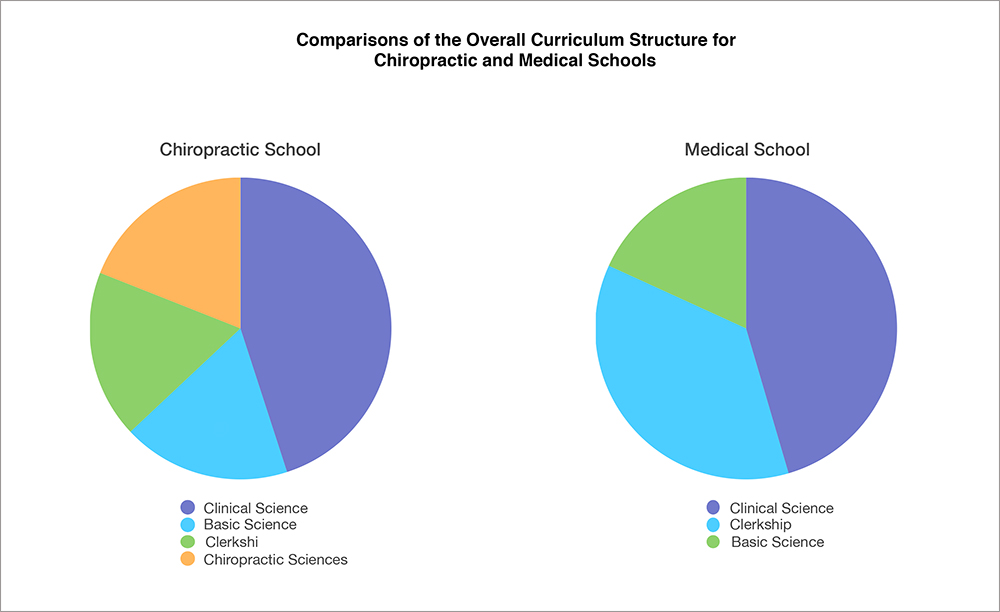
In several core subjects, including anatomy, diagnosis, and radiology, chiropractic training often involves more classroom hours than medical school. In other areas, such as pharmacology, obstetrics, and surgery, medical doctors receive more training, which makes sense since chiropractors do not prescribe drugs or perform surgery in most states.

This difference does not make one profession better than the other. It simply means they serve different purposes.


 

DC-vs-MD-educationMD vs DC ChartDC-vs-MD-education

Chiropractors vs Medical Doctors: Apples and Oranges

Asking whether a chiropractor is “on par” with a medical doctor misses the point. It is like comparing apples to oranges. Both are valuable, but they are not the same.

Medical doctors are essential for emergency care, trauma, infections, advanced diagnostics, surgery, and pharmaceutical management. If you are in a car accident, have severe trauma, chest pain, or a medical emergency, you should absolutely go to the emergency room immediately.

Chiropractic care focuses on improving how the body functions by optimizing the relationship between the spine, nervous system, and movement. Chiropractors do not replace medical doctors, and medical doctors do not replace chiropractors. The best outcomes often happen when each stays in their lane and respects the other.

Unfortunately, there has historically been negativity on both sides. Chiropractors are sometimes labeled as “quacks,” while medical doctors are criticized for relying too heavily on medications. Neither attitude helps patients, and neither reflects reality. Healthcare works best when professionals collaborate rather than compete.

When Chiropractic Care Makes Sense

If you are dealing with chronic pain and want someone to simply mask symptoms with medication, modern medicine can offer that. There are times when medication is appropriate and necessary.

If, however, your goal is to become stronger, move better, recover faster, and improve how your body handles physical, chemical, and emotional stress, chiropractic care can play a powerful role.

The body is controlled by the nervous system. The brain sends signals through the spinal cord and nerves to every organ, tissue, and cell. When spinal joints are not moving properly, or when posture and biomechanics are compromised, that communication can be disrupted. Over time, this can affect how well the body functions and heals.

Structure Determines Function

Chiropractic is built on a simple but powerful principle: structure determines function. When the spine and joints move the way they are designed to move, the nervous system can communicate more effectively. When that communication improves, the body has a better opportunity to heal, adapt, and perform at a higher level.

Chiropractic adjustments, combined with movement, rehabilitation, and lifestyle guidance, aim to restore proper structure so the body can function at its best. This approach is not about chasing symptoms. It is about supporting the body’s natural ability to regulate and repair itself.

Who Can Benefit From Chiropractic?

The short answer is everyone.

From desk workers and athletes to parents, professionals, and retirees, nearly everyone places stress on their spine and nervous system every day. Chiropractic care is not just for people in pain. It is for people who want to move better, recover faster, and function at a higher level in daily life.

FAQ’s

Are chiropractors real doctors?
Yes. Chiropractors earn the title Doctor of Chiropractic (DC) after completing a doctoral-level education and national board exams.

What is the difference between a chiropractor and a medical doctor?
Medical doctors focus on drugs, surgery, and emergency care, while chiropractors focus on spinal health, nervous system function, and natural healing.

Do chiropractors go to medical school?
Chiropractors attend accredited chiropractic colleges, not medical school, but complete extensive training in anatomy, diagnosis, neurology, and radiology.

When should I see a chiropractor instead of an MD?
Chiropractic care is ideal for chronic pain, posture issues, mobility problems, and improving overall physical function.

If you’re looking for a doctor who will hand you a pill and send you on your way, I am probably not your guy.

If you’re looking for someone who helps your body work better so you can live stronger, move easier, and stop Googling your symptoms at 2 a.m., then chiropractic care might be exactly what you’ve been missing.

👉 Schedule an appointment with Lamb Chiropractic and let’s help your body do what it was designed to do, without the drama.
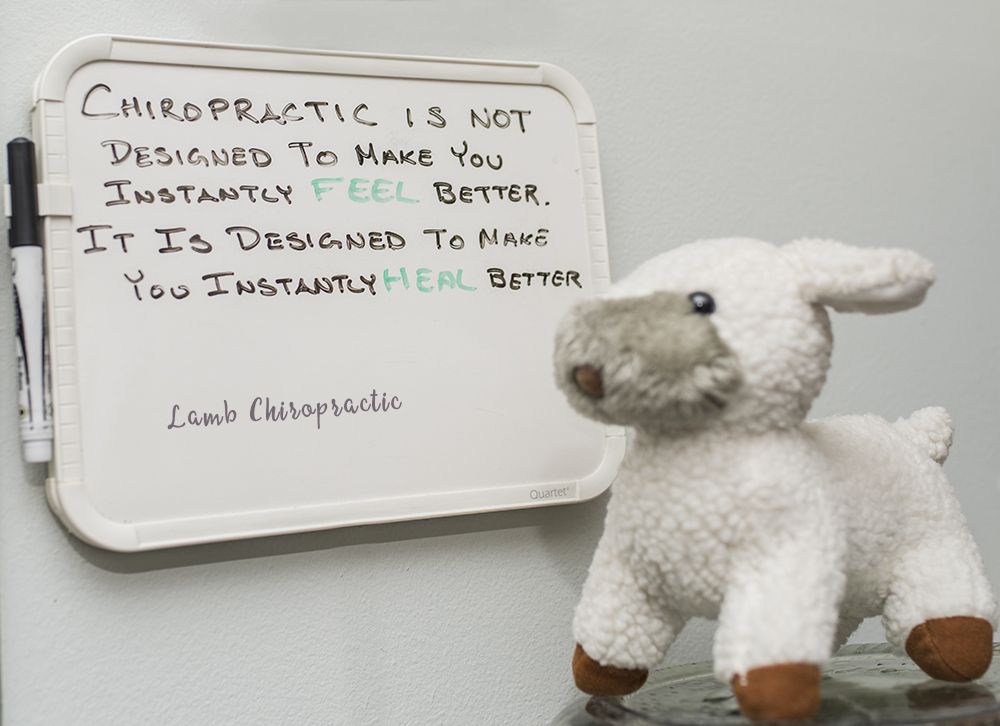
 

Chiropractic_Designed_To_Heal.jpg

Chiropractic for healing better

Chiropractic Care Focuses on the Nervous System | Natural Health Explained

Chiropractic care focuses on the relationship between the spine, the nervous system, and overall health, making it a natural, drug-free approach to supporting how the body functions and heals. At its core, chiropractic is built on the understanding that the nervous system controls every cell, tissue, organ, and system in the body—and when that system is disrupted, the body’s ability to function at its best can be compromised.

Rather than simply masking symptoms, chiropractic care works to detect, reduce, and help prevent nervous system dysfunction, allowing the body to heal itself the way it was designed to—from above down and from the inside out.

Chiropractic as a Science, Art, and Philosophy

Chiropractic is often described as a science, an art, and a philosophy.

  • The science of chiropractic is rooted in anatomy, neurology, biomechanics, and physiology—specifically how spinal alignment affects nervous system communication.

  • The art of chiropractic lies in the skilled application of precise adjustments tailored to each individual.

  • The philosophy centers on the body’s innate ability to heal itself when interference is removed.

This unique combination sets chiropractic apart from many conventional healthcare approaches that focus primarily on treating symptoms rather than addressing underlying dysfunction.

The Role of the Nervous System in Health

The nervous system is the master control system of the body. It coordinates movement, regulates organ function, processes sensory input, and allows the body to adapt to stress.

When the spine is functioning properly, nerve signals can travel freely between the brain and the body. However, spinal joint dysfunction—often referred to in chiropractic as vertebral subluxation—can interfere with this communication, potentially affecting how the body functions as a whole.

Chiropractic care is designed to improve the flow of nerve impulses by restoring proper motion and alignment to the spine, helping the nervous system operate without unnecessary interference.

What Is a Vertebral Subluxation?

A vertebral subluxation refers to a misalignment or dysfunction of one or more joints in the spine that can:

  • Alter normal joint motion

  • Create tension or imbalance in surrounding muscles

  • Interfere with normal nerve signaling

Over time, these disruptions may reduce the body’s ability to maintain optimal health and adaptability.

Why Chiropractors Focus on Subluxation

Chiropractors do not diagnose or treat disease. Instead, the chiropractic objective is to identify and correct vertebral subluxations so the nervous system can function more effectively. This distinction is essential to understanding the chiropractic approach and avoiding confusion or unrealistic expectations.

Chiropractic Adjustments Explained

A chiropractic adjustment is the application of a specific, controlled force to a joint—most commonly in the spine—to facilitate the body’s natural correction of vertebral subluxation.

Adjustments are:

  • Precise and purposeful

  • Tailored to the individual’s needs

  • Designed to restore motion and reduce nerve interference

The goal is not to “treat” a condition, but to remove obstacles that prevent the body from expressing health normally.

Chiropractic Care Is More Than Symptom Relief

While many people initially seek chiropractic care for pain or discomfort, chiropractic is not limited to symptomatic relief. True chiropractic care is about improving how the body functions overall.

Health is more than the absence of disease—it is a state of optimal physical, mental, and social well-being. By addressing spinal and nervous system dysfunction, chiropractic supports long-term wellness rather than short-term fixes.

As Thomas Edison famously stated:

“The doctor of the future will give no medicine, but will interest his patients in the care of the human frame, in diet, and in the cause and prevention of disease.”

This philosophy closely aligns with the chiropractic model of care.

A Natural, Drug-Free Approach to Health

Chiropractic care is a natural form of healthcare that works with the body rather than against it. Because it does not rely on medications or invasive procedures, it avoids many of the risks and side effects associated with those approaches.

By improving spinal mechanics and nervous system function, chiropractic care helps the body:

  • Adapt better to physical and emotional stress

  • Maintain balance and coordination

  • Maximize overall performance and resilience

This makes chiropractic a sensible option for individuals seeking a proactive, wellness-focused approach to health.

Patient Understanding and Shared Goals

For chiropractic care to be effective, it’s important that both the chiropractor and the patient are working toward the same objective. This includes a clear understanding of:

  • What chiropractic care is—and what it is not

  • The purpose of spinal adjustments

  • The focus on nervous system function rather than disease treatment

Clear communication helps prevent confusion or disappointment and ensures that care aligns with each patient’s expectations.

When Non-Chiropractic Findings Are Discovered

During a chiropractic spinal evaluation, there may be times when non-chiropractic or unusual findings are identified. In those cases:

  • Patients are informed of the findings

  • Appropriate referrals to other healthcare providers may be recommended

  • Chiropractors do not diagnose or treat conditions outside their scope

Chiropractic care remains focused on correcting vertebral subluxation and supporting nervous system health, regardless of any outside diagnosis.

The Chiropractic Objective

Chiropractic care focuses on the nervous system. The sole objective of chiropractic care is to remove interference to the expression of health through specific spinal adjustments. By correcting vertebral subluxation, chiropractic helps restore balance within the nervous system so the body can function as it was designed to.

No matter your current state of health, chiropractic care offers an opportunity to improve how your body works—naturally, safely, and effectively.


What Is Chiropractic? Doctor examining a patient


Frequently Asked Questions About Chiropractic Care

How does chiropractic care focus on the nervous system?

Chiropractic care focuses on the nervous system by identifying and correcting spinal joint dysfunction that may interfere with nerve communication between the brain and body. By improving spinal motion and alignment, chiropractic adjustments help support proper nervous system function.

What is a vertebral subluxation in chiropractic care?

A vertebral subluxation is a misalignment or restriction of motion in one or more spinal joints that may affect nerve signaling and overall function. Chiropractors focus on correcting these dysfunctions to help reduce interference in the nervous system.

Is chiropractic care only for pain relief?

No. While many people seek chiropractic care for pain, chiropractic is not limited to symptom relief. Its primary focus is improving how the body functions by supporting the nervous system and restoring proper spinal movement.

Are chiropractic adjustments safe?

Chiropractic adjustments are considered safe when performed by a licensed chiropractor following a thorough evaluation. Chiropractors are trained to assess when care is appropriate and when referral to another healthcare provider is necessary.

Does a chiropractor diagnose or treat diseases?

Chiropractors do not diagnose or treat diseases. Chiropractic care is focused on the detection and correction of vertebral subluxation to support nervous system function and overall health.

Can chiropractic care be used alongside medical care?

Yes. Chiropractic care can be part of a collaborative approach to health. If non-chiropractic findings are discovered, patients may be referred to appropriate medical providers while continuing chiropractic care when appropriate.

How long does it take to see results from chiropractic care?

Results vary depending on individual factors such as overall health, spinal condition, and consistency of care. Some people notice changes quickly, while others experience gradual improvements over time as nervous system function improves.

???? Schedule a consultation today and start your journey to pain-free movement!

Or send us a message:

Name

Newsletter Signup

Copyright © Lamb Chiropractic | Web Development and Photography by CorporatePhotoVideo.com